What is a roof gully?
5 min readReece Francis, Roofer
A roof gully is a channel that gathers rainwater off a roof and carries it to an outlet. The word is used loosely, and it usually means one of three things on a house. It can be a lined gutter running between two roof slopes, a gutter hidden behind a parapet wall at the edge of the roof, or the low point on a flat roof where the water drains away. At ground level, a gully is also the drain a downpipe empties into, which is how the building regulations use the word. What all of them share is that they take water from a large area and send it through one narrow place, so when a gully blocks or fails, a lot of water ends up in one spot.
The reason a gully matters more than an ordinary gutter is where the water goes when it overflows. An eaves gutter that overflows spills down the outside of the wall. A gully that overflows spills inwards, over its lining and into the roof, the insulation and the ceiling below. The government's Approved Document H, which covers drainage, singles out valley gutters, parapet gutters and flat roof drainage for that reason, saying that where overtopping would have particularly high consequences, such as water entering the building, the design should follow the British Standard for roof drainage.
Roof gully or roof valley?
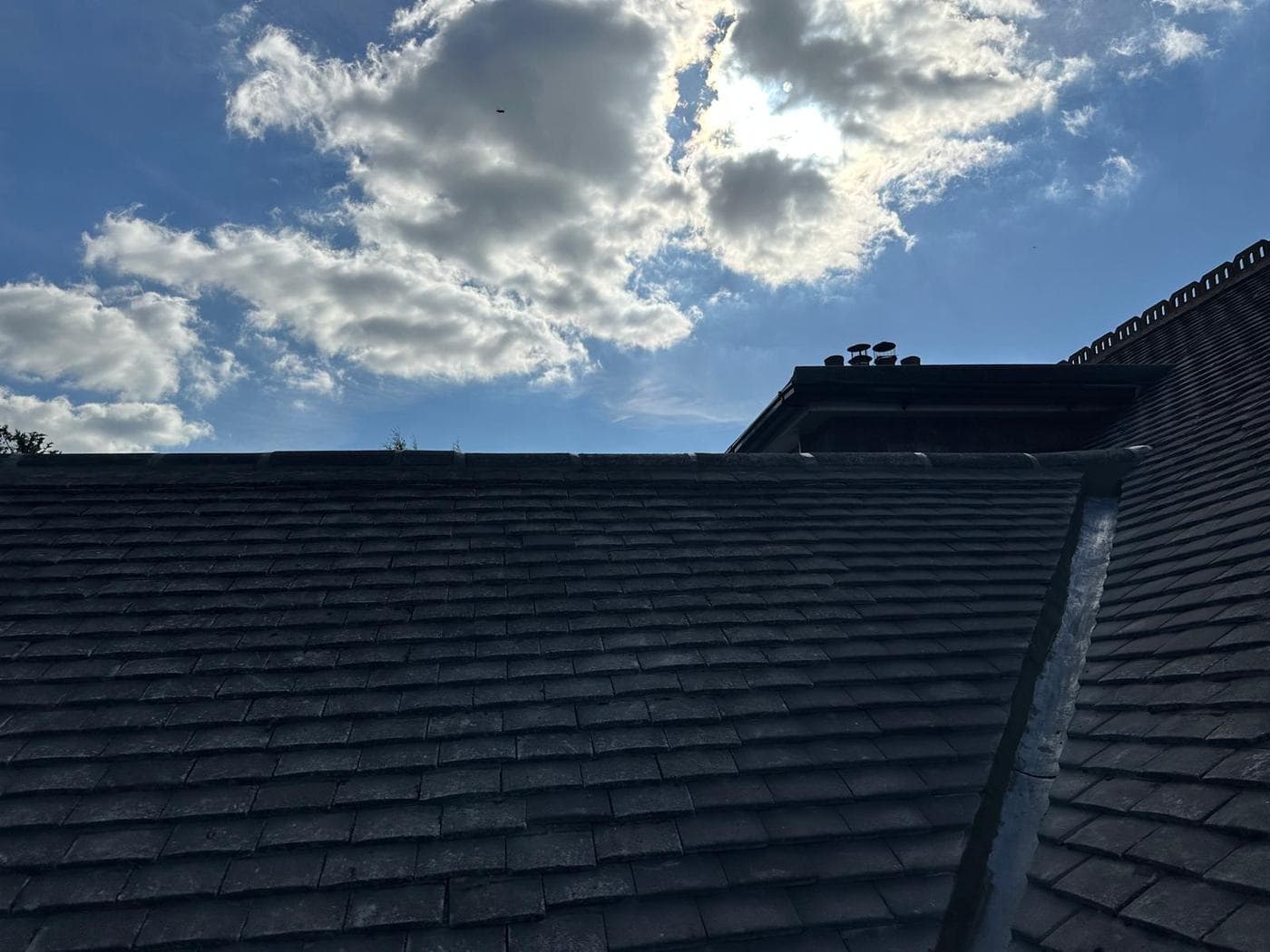
A valley on a roof is the internal angle where two pitched slopes meet, and on many roofs the valley itself is the channel, lined in lead or a moulded trough with the tiles cut along each side. People often call a valley a gully, and the two overlap. In the stricter sense a gully is a gutter with its own flat bottom and sides, wide enough to hold water, rather than a narrow angle between two slopes. That is the kind found behind parapets and between two roofs that slope towards each other.
The kinds of roof gully on a house
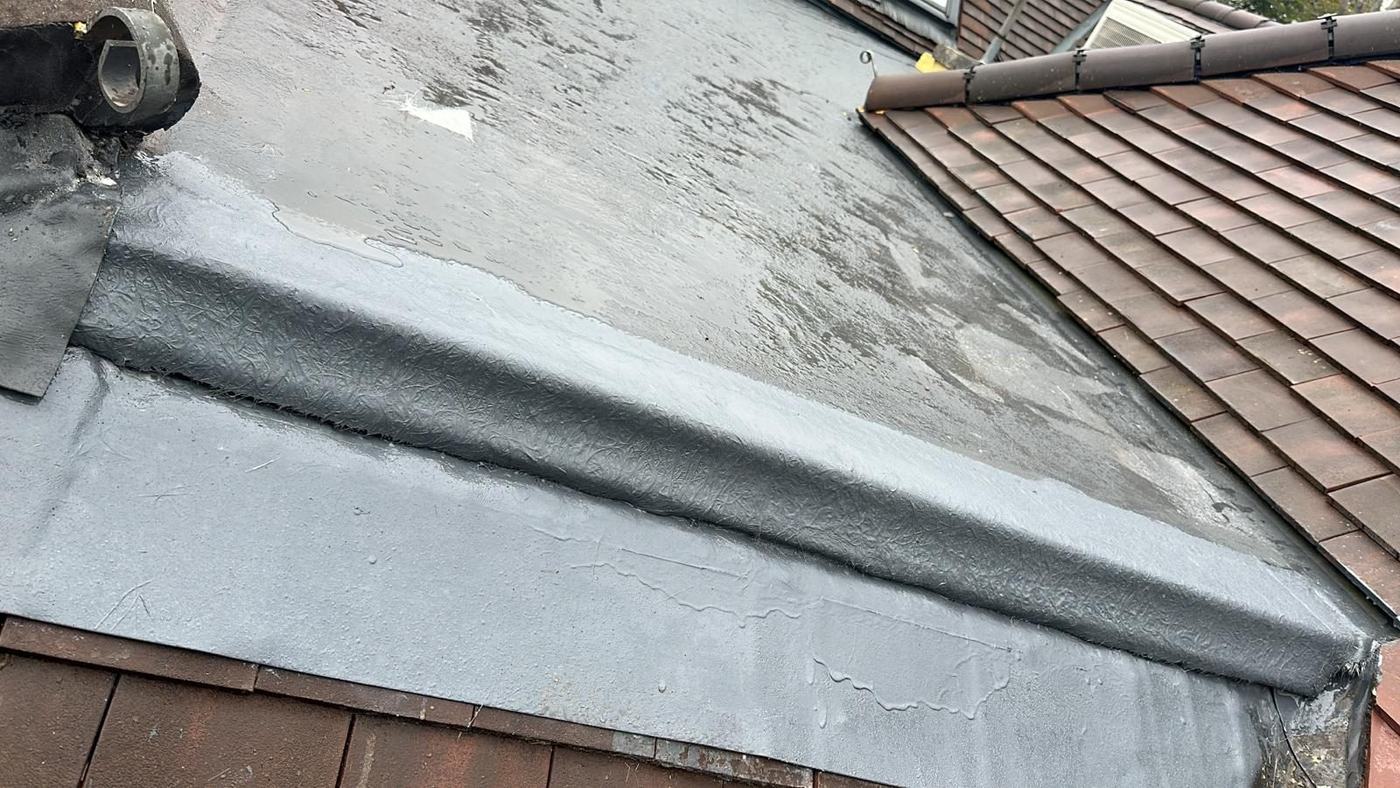
Valley gutters. A wider, flat bottomed valley between two slopes, usually lined in lead.
Parapet gutters. Where the front or side wall of a house rises above the roof as a parapet, the rain running off the slope collects in a gutter behind it, out of sight from the street. The water then leaves through an outlet to a downpipe.
Box and central gutters. Where two roofs slope towards each other, or a roof meets a wall or another building, the water collects in a box gutter between them.
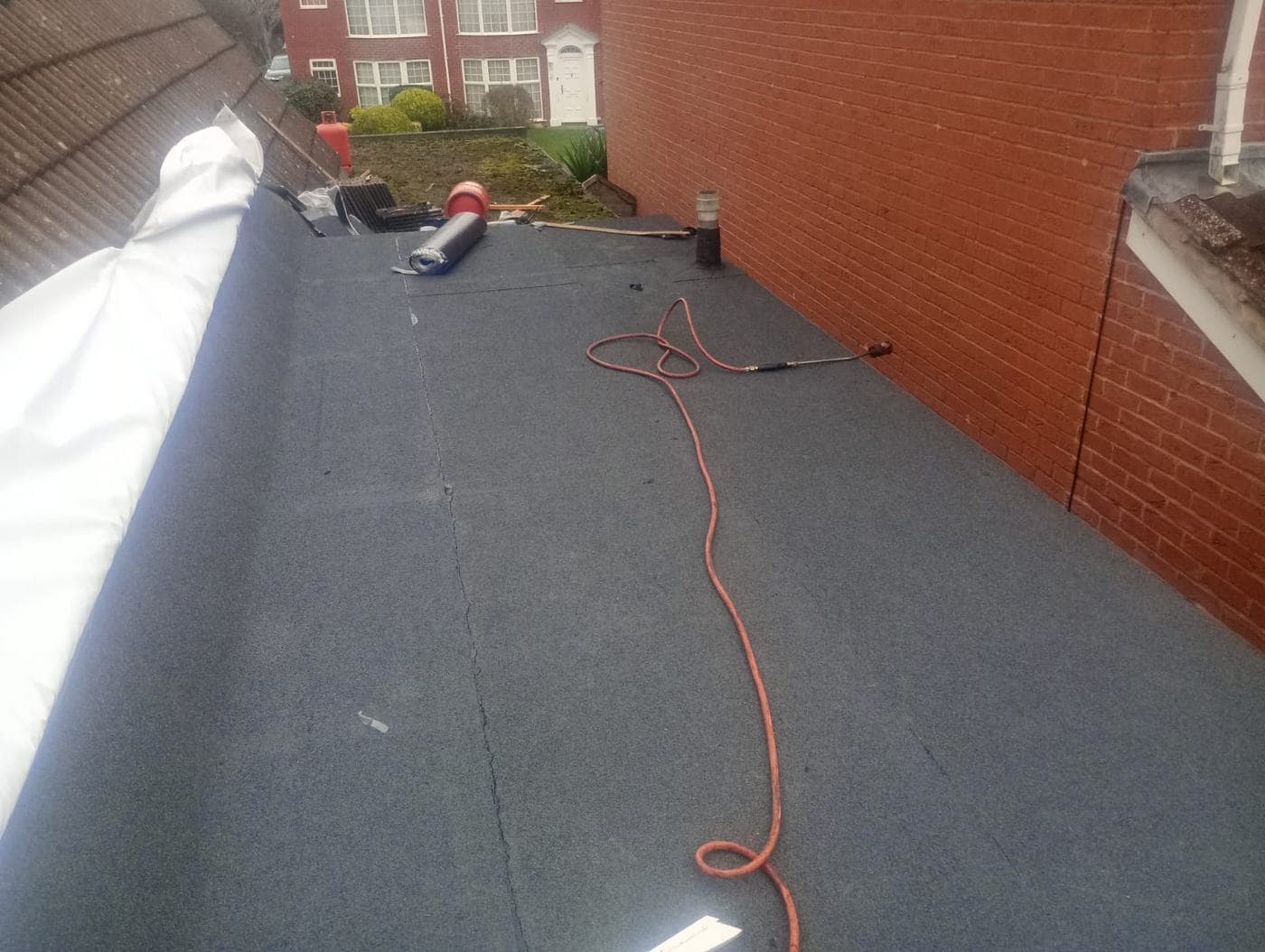
Flat roof outlets. On a flat roof the gully is the outlet, often set in a slight dip called a sump, that the whole roof drains towards. The British Standard for flat roofs was revised in December 2025, and Bauder's summary of the changes notes that it now sets limits on sump sizes and requires an emergency overflow on any roof with a single outlet, sized to cope if that outlet is completely blocked.
Why roof gullies leak
They block. Leaves, moss and debris, including bits of broken tile, collect in gullies and outlets. The Society for the Protection of Ancient Buildings, in its advice on rainwater fittings, puts poor maintenance first among the reasons they fail. We often find that problems in a valley start when the lining begins to deteriorate or when moss and leaves build up, and a gully is no different. Moss washing down from the tiles is a common source, which is where moss removal helps.
The lining splits. Most older gullies are lined in lead. Lead expands and contracts as it warms and cools, so lengths that are too long or fixed too tightly split over the years, and SPAB notes that over sized and over fixed lead linings suffer fatigue. Once a lining has split, water gets under it every time it rains.
Snow and ice. Snow lying in a parapet or valley gutter melts slowly and works water through the joints. SPAB advises clearing snow from parapet and valley gutters with a wooden or plastic shovel rather than a metal one, so the lining is not damaged in the process.
Nobody sees them. A parapet gutter is invisible from the ground, so a blocked one looks like nothing at all from the pavement until the ceiling stains. SPAB points out that investigation often reveals rot in concealed timbers, such as the roof timbers bearing beneath parapet gutters, by the time the damp shows inside.
Signs a gully needs attention
- Damp or staining on a top floor ceiling along the line where two roofs meet, or just inside a parapet wall.
- Staining or algae on the outside wall below a parapet or an outlet.
- A leak that only appears in heavy rain, when the gully is running full.
- Plants or moss growing out of the gutter line.
- An overflow pipe running, which means the outlet below it is blocked.
Damp inside can come from other places too. Damp patches on ceilings and walls that come and go with the rain point to water getting in from outside, while ones that ignore the weather usually have another cause, so narrow it down before you spend anything.
Keeping a roof gully working
Clear it at least once a year, after the leaves have come down in autumn, and more often under trees. SPAB recommends clearing rainwater fittings regularly, particularly after the autumn leaf fall, and checking for leaks in heavy rain, which is when a gully shows whether it is really coping. It is the same reason gutter maintenance matters down at the eaves.
Check there is somewhere for the water to go if the outlet blocks. Approved Document H says gutters should be laid so that any overflow beyond their design capacity is discharged clear of the building, and that on flat roofs, valley gutters and parapet gutters additional outlets may be necessary. A parapet or box gutter with one outlet and no overflow is the arrangement most likely to put water inside the house.
Do not climb out to a gully yourself. They are usually reached across a roof slope or from a window, and roof work is a job for someone with the right access. Where getting to a gully is the reason it never gets cleared, SPAB suggests that an access hatch or a fixed ladder may be worth considering.
Repair or renew
A gully that overflowed because it was blocked needs clearing, not relining, and that is worth knowing before anyone quotes for more. A lining with a split or a lifted joint can often be repaired. A lining that has split in several places, or one laid in lengths too long to cope with movement, is better relined in shorter lengths with proper joints, and the timber underneath is checked while it is open, because that is where hidden rot shows up. Where a flat roof has a gully but no overflow, the flashing and upstands on a flat roof are worth checking at the same visit, since water lying against a wall finds those first.
Getting a roof gully looked at
Rated Roofers and Builders has over 25 years in roofing and building across Surrey and South London. We fit and repair lead valleys and other lead linings through our lead work and flashing service, clear and repair gutters through our guttering service, and trace leaks to where the water is actually getting in as part of our roof repairs. If you are not sure where the water is coming from, a roof inspection is the place to start. We come and look before we price anything, and the quote is free with no obligation. If you think a gully is letting water in, contact us or get a free quote.