What causes damp patches on ceilings and walls
6 min readReece Francis, Roofer
Damp patches on ceilings and walls come down to a handful of causes, and the single most useful thing you can do is work out which one you are dealing with, because the fix for one does nothing for another. The main causes are condensation, which is by far the most common, penetrating damp, where water gets in through an external fault such as a slipped tile, failed flashing, a blocked gutter or worn pointing, rising damp from ground moisture, which is far rarer than most people are told, and hidden plumbing leaks. Each looks similar at first, a stain, peeling paint or mould, but each has a different cause and a different repair.
As a rough rule, a damp patch on a ceiling is most often a roof problem or condensation, while a patch on a wall can be any of the causes above. What tells them apart is not the stain itself but three things, which are where the patch is, what it looks like, and when it appears. From working with clients across South London and Surrey, the most expensive mistake we see is treating the wrong cause, so it is worth understanding the differences before spending anything on a fix.
Condensation, the most common cause
Condensation is by far the most common form of damp in UK homes. It happens when warm, moist air from cooking, washing and drying meets a cold surface and turns back into water. The signs are distinctive once you know them. Condensation shows up as black spot mould rather than a spreading stain, it collects in cold corners, around windows, on north-facing walls and behind furniture where air does not circulate, and it is worse in winter. It is a ventilation and heating issue rather than a fault in the building, and it is not solved by damp proofing.
In the roof space, the same thing happens when a loft is poorly ventilated, and warm air from the house condenses on the cold underside of the roof. This is why blocked eaves ventilation, and spray foam sprayed to the underside of a roof, so often cause damp that looks like a leak but is actually condensation. Improving airflow, rather than sealing the roof up further, is usually the answer.
Penetrating damp, the roofer's domain
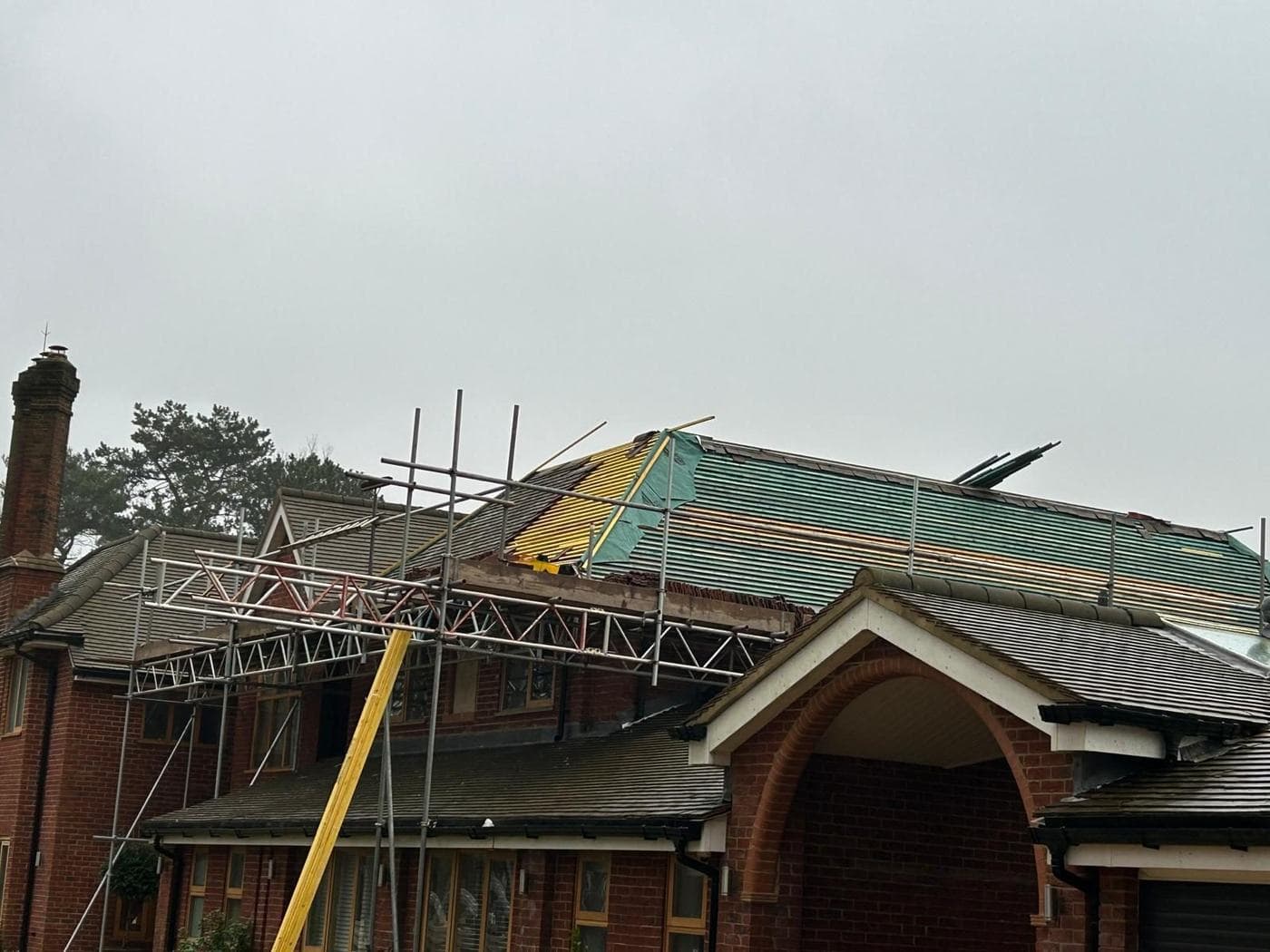
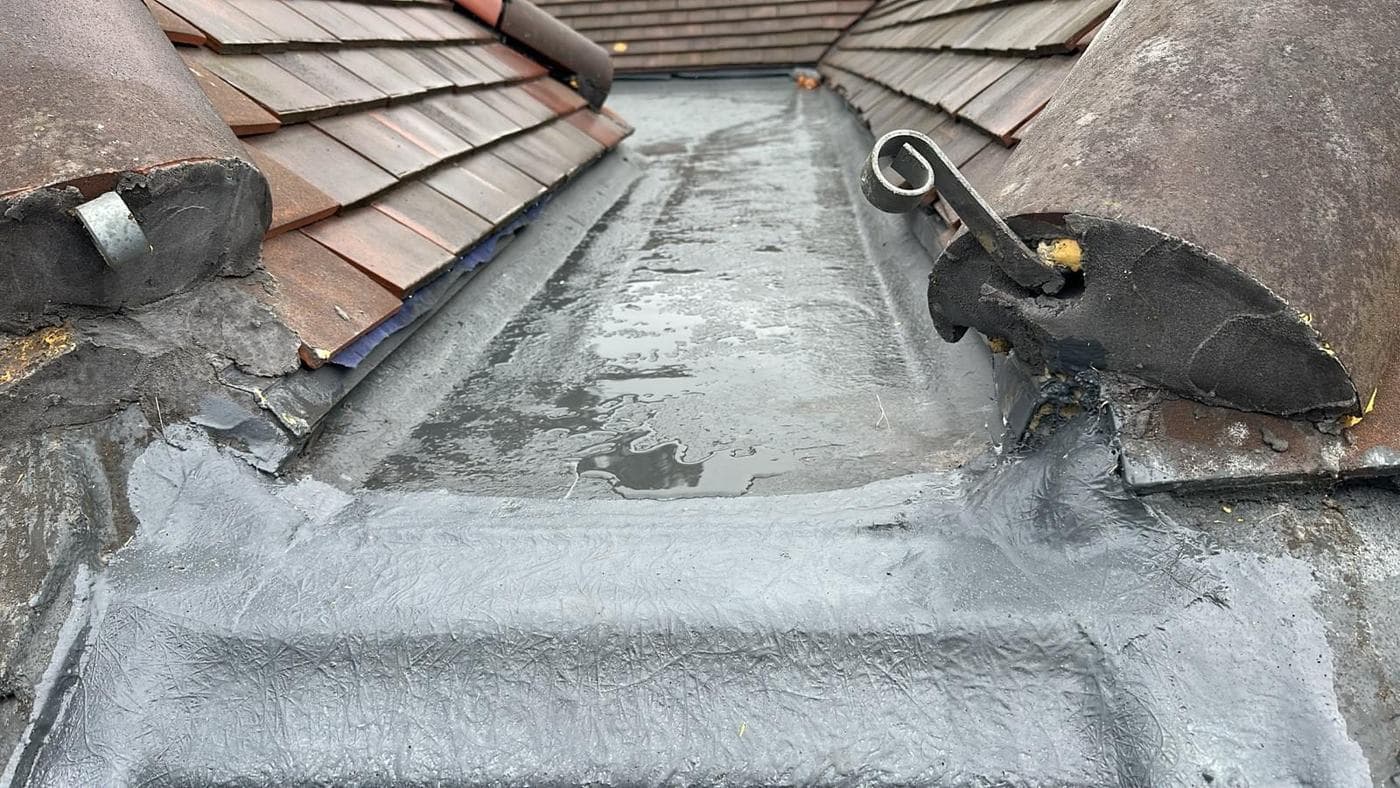
Penetrating damp is water getting into the building from outside through a defect, and it is the cause most often behind a damp patch on a ceiling. On a roof, that fault is usually a slipped or cracked tile, failed flashing around a chimney or in a valley, or a blocked or overflowing gutter sending water back into the eaves. On a wall, it is usually worn pointing, cracked render or a failed seal around a window.
The giveaway is weather. Penetrating damp appears or worsens after rain and dries out in settled weather, and the patch usually has a defined edge rather than the diffuse mould of condensation. The good news is that it is fixable, because it comes from a specific defect. A leaking roof causing a ceiling stain is one of the most common things we are called to, and tracing it to the failed detail and repairing that solves it properly. The catch is that water travels, so the patch is often not directly below the point where the water is getting in, which is why finding the true source matters more than treating the stain.
Rising damp, and why it is over-diagnosed
Rising damp is ground moisture drawn up through masonry by capillary action, and it is real, but it is far less common than the damp proofing industry would have you believe. It only affects the lower part of ground floor walls, rising to roughly a metre from the ground at most, and it leaves a horizontal tide mark and white salt deposits near skirting height. It never appears on a ceiling or an upstairs wall.
We mention it mainly as a warning, because rising damp is the most frequently misdiagnosed of all. Some firms offering free surveys diagnose it and sell a chemical damp proof course when the real cause is condensation or a simple maintenance defect. If a patch is high on a wall, on a ceiling, or changes with the weather, it is not rising damp. Genuine rising damp needs a specialist, and this is one to take to a member of the Property Care Association for independent diagnosis rather than to a company that profits from the treatment. For a neutral overview of all the damp types and how they are dealt with, the HomeOwners Alliance guide to spotting and getting rid of damp is a useful independent reference.
Plumbing leaks and other causes
A hidden plumbing leak produces damp that is constant regardless of the weather and usually sits near a pipe run, a bathroom or a kitchen, sometimes alongside a boiler losing pressure or a water bill creeping up. Old chimney breasts can also show staining from salts left by years of use, which draw in moisture from the air. Neither of these is a roofing job, and a plumbing leak in particular is one for a plumber to trace and fix.
How to tell them apart
The diagnosis comes down to where, what and when. A ceiling patch points to the roof. A high wall patch points to penetrating damp or condensation. A low patch with a tide mark on a ground floor points to rising damp. Black spot mould in cold corners is condensation, a defined stain is penetrating damp, and a tide mark with salts is rising damp. Condensation is worst in winter, penetrating damp tracks the rain, and a plumbing leak ignores the weather entirely.
In our experience, checking whether a damp patch changes with the weather works better than assuming it is rising damp because a patch that darkens after rain is penetrating damp from a defect you can actually fix, whereas the rising damp so often diagnosed is far rarer than people are told. Getting this one distinction right saves a great many homeowners from paying for treatment they never needed.
Why it is worth acting quickly
Whatever the cause, damp does not fix itself, and left alone it spreads into plaster and timber and encourages black mould, which is bad for the building and for health. The important principle is to treat the cause and not the symptom. We've found that painting or plastering over a damp patch without dealing with the source simply hides it for a few weeks before it returns, usually worse, so the stain is a signal to find the cause rather than to cover it up.
How we help
Rated Roofers and Builders deals with the roof and building causes of damp across South London and Surrey. That covers roof repairs and leak tracing behind ceiling stains, chimney repairs and flashing, guttering and roofline where overflowing water is the cause, ventilation and spray foam removal where the problem is condensation in the roof, and brickwork and repointing where penetrating damp is coming through a wall. Where the cause is rising damp or an internal plumbing leak, we will tell you honestly that it is a job for a different trade rather than sell you work you do not need. We are a family run business with over 25 years in roofing and building and more than 50 successful projects completed, fully insured with public liability cover, Google Guaranteed, and all our work carries a company guarantee.
What to do next
If you have a damp patch, note where it is, what it looks like and whether it comes and goes with the weather, because that alone narrows down the cause. Then get it diagnosed properly before paying for any treatment. For a straight assessment of a damp patch that looks like it could be coming from the roof, get in touch or request a free quote.