What Is a Dry Ridge System?
5 min readReece Francis, Roofer

A dry ridge system holds the ridge tiles along the top of a pitched roof with mechanical fixings, screws or clips into a timber batten, instead of bedding them in mortar. A flexible roll runs along the ridge underneath the tiles to keep the weather out, and on many systems that roll is vented, so the same strip that keeps rain out also lets damp air escape from the roof space. The same approach is used on hips, the sloping ridges that run down where two roof slopes meet at a corner.
It has become the normal way to finish a ridge for a simple reason. Mortar on its own is no longer accepted as the way to hold ridge tiles on. Since the British Standard for slating and tiling was revised in 2014, ridge and hip tiles have to be mechanically fixed whether mortar is used or not, and a dry system is the most straightforward way to do that.
How a dry ridge is put together
A treated timber ridge batten is fixed along the apex on metal brackets, set at the right height for the ridge tiles. The ridge roll, a strip with flexible skirts along each side, is laid over it and dressed down onto the tiles below so that it follows their profile and closes the gap. The ridge tiles then go on top, each one screwed or clipped down into the batten, with a seal or union covering the joint between one ridge tile and the next. The ends are closed off with caps.
Nothing in that depends on mortar sticking to anything, which is the whole point. Each tile is held by a fixing that can be checked, and on many systems a single tile can be lifted and refixed later without breaking out a run of bedding.
Why mortar alone stopped being enough
A mortar bedded ridge relies on the mortar gripping both the ridge tile above and the tiles below. It sits at the most exposed point of the roof, it is never quite the same material as the tiles it joins, and the roof moves slightly with heat, cold and wind. Over the years the bond fails, the joints crack, water gets into the bedding and freezes, and eventually a ridge tile is sitting on crumbling mortar, held down by little more than its own weight. In a strong wind that is not much.
The code of practice for slating and tiling, BS 5534, took that on board in 2014. As LABC explains, the revision said mortar could no longer be relied on as the only means of securing tiles, and hip and ridge tiles all had to be mechanically fixed regardless of whether mortar was used. LABC also notes that BS 5534 covers normal re-roofing work, including repairs, not only new houses.
Mortar has not been banned. A ridge can still be bedded in mortar provided it is mechanically fixed as well, which is how a traditional finish is kept on older roofs. What changed is that the mortar now provides the weathering and the look, and something else has to do the holding on.
Not every dry system is equal
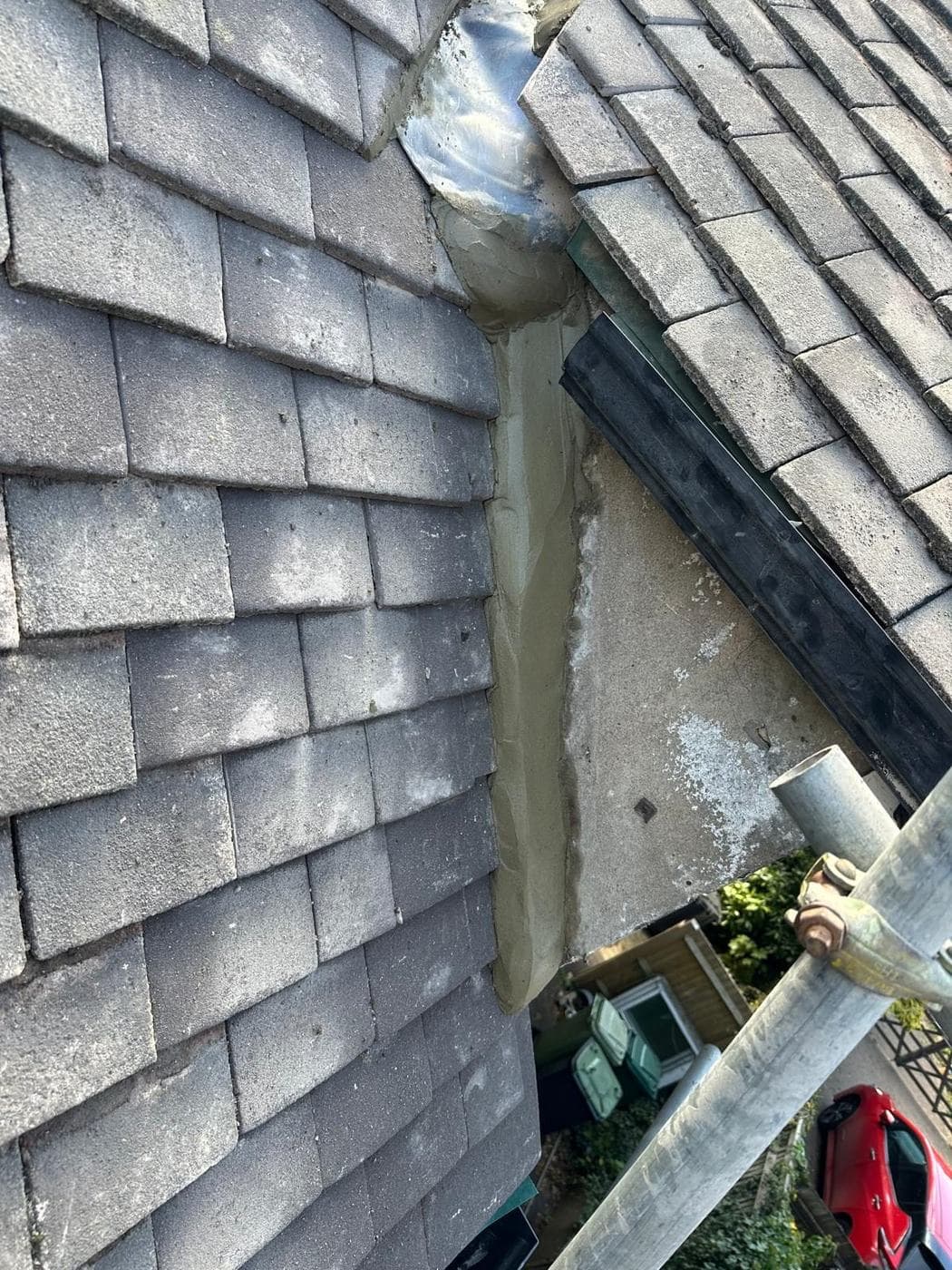
The 2014 change moved a lot of roofs onto dry fix products, and some of those products were not good enough. LABC records reports that some dry fixed systems did not provide enough mechanical restraint, and that some dry verges sent rainwater down the face of the gable wall rather than away from it, leaving black staining that was particularly obvious on rendered walls.
The answer was a second standard. BS 8612, published in 2018, sets performance requirements for dry fixed ridge, hip and verge systems, covering fixing security, weather tightness, durability and ventilation. BSI notes that more than half of the UK's new and refurbished roofs use dry fixing for ridges and hips. If you are having a dry ridge fitted, ask whether the system is tested to BS 8612. It is a perfectly reasonable question, and any roofer should be able to answer it.
The ventilation bonus
A vented ridge roll gives high level ventilation along the full length of the ridge, which is exactly where moist air needs to leave a cold roof. We went into why that matters, and why the eaves matter even more, in our guide to roof ventilation. On a re-roof it is often the neatest way to add ridge ventilation without cutting vent tiles into the slope.
Does your mortar ridge need replacing?
Not if it is sound. A mortar ridge that is intact, with every tile firmly bedded, is doing its job, and nobody needs to replace it just because the standard has moved on. The question comes up when it starts to fail, and these are the usual signs.
- Cracked or missing mortar along the ridge, or at the joints between ridge tiles
- Lumps of mortar in the gutters or on the ground below
- A ridge tile that has slipped, lifted or rocks when it is touched
- Damp or staining in the loft directly under the ridge
Those are worth acting on promptly, because a loose ridge tile is a heavy object at the highest point of the house. Storms tend to find them first, which is part of why bad weather does more damage over time than any single gale suggests. If a tile has already come down, our piece on whether loose roof tiles always need replacing covers what can be saved.
When a ridge is failing, the realistic options are to rebed it in mortar with mechanical fixings, or to convert it to a dry system. Either is a better answer than repointing alone, because repointing only fills the joints between tiles that are still sitting on bedding that has lost its grip, and the next hard winter opens them up again. Repointing has its place where the bedding underneath is sound. Where it is not, the job needs taking back to the batten.
Appearance, and older houses
A dry ridge looks slightly different from a mortared one, with a neat line of seal rather than a bed of mortar under each tile, and on most houses nobody notices from the street. On some period properties a mortar bedded ridge with concealed mechanical fixings suits the roof better, and on a listed building it may be the only acceptable answer. If the house is listed, check with the council before changing how the ridge is finished, for the reasons we set out in our piece on planning permission for a new roof.
Getting your ridge checked
The team at Rated Roofers and Builders has over 25 years in roofing and building, working across Surrey and South London, from Bromley to Redhill. Ridge work on tiled roofs and slate roofs is part of what we do, both within a new roof and as a roof repair where an old mortar ridge has given up. If your ridge is shedding mortar, contact us and we will tell you honestly whether it needs rebedding with mechanical fixings, a smaller repair or simply leaving alone.
Need this doing
Roof Repairs