Why Is My Chimney Leaking?
5 min readReece Francis, Roofer
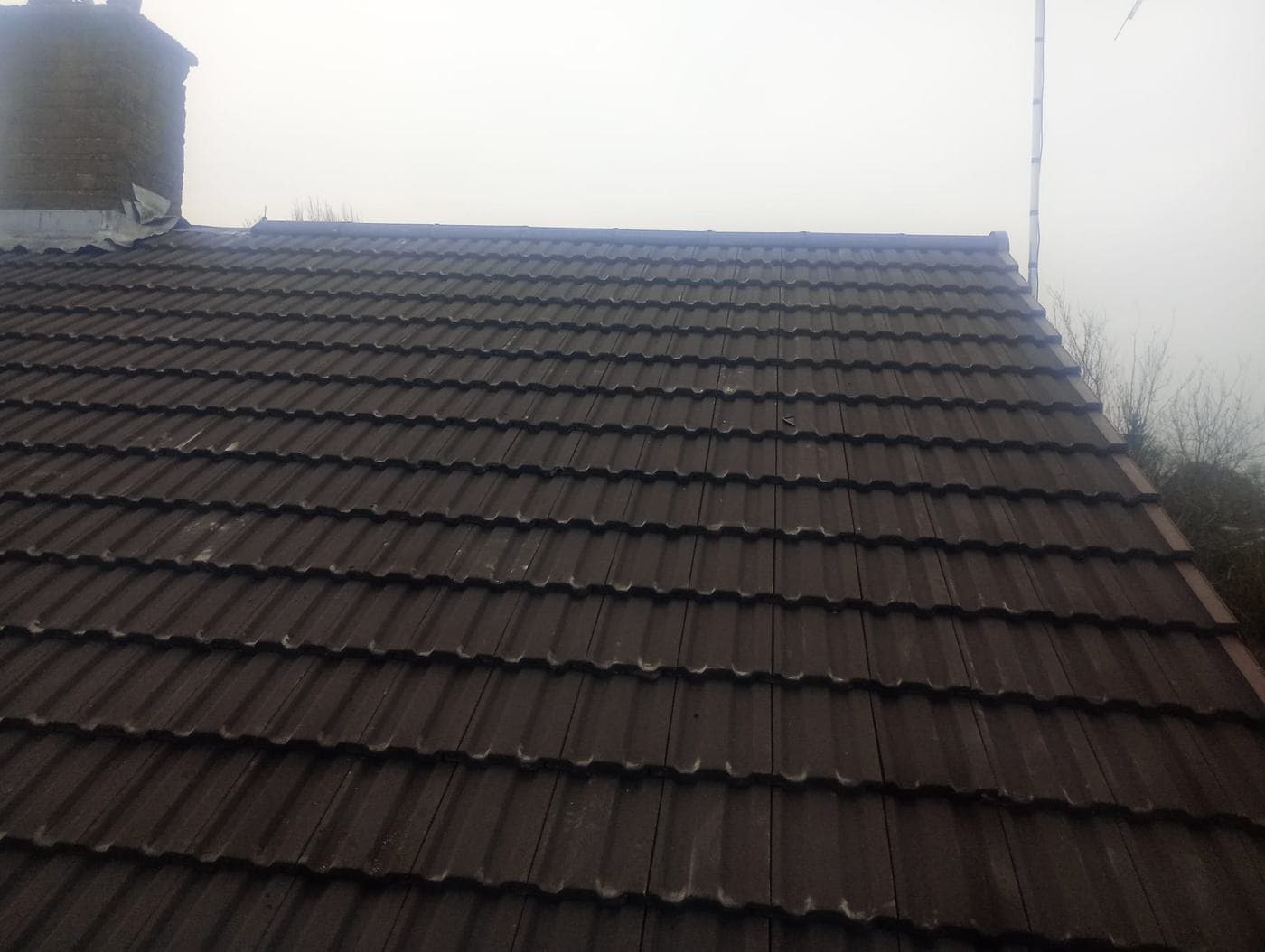
A chimney usually leaks for one of four reasons. The flashing where the stack meets the roof has failed, the mortar capping on top of the stack has cracked, rain is falling straight down an open chimney pot, or the brickwork and pointing of the stack have become porous enough to soak water through. Each one tends to show up in a slightly different place inside the house, and that is the most useful clue you have.
There is a fifth cause that looks exactly like a leak and is not one. Brown, tarry stains on a chimney breast are very often condensation inside a flue that has been blocked off with no ventilation, and no amount of roof work will cure them. Telling the two apart before anyone goes up a ladder saves money.
Why chimneys leak more than anything else on the roof
A chimney stack is a column of masonry pushed up through the roof, exposed on every side, with a joint all the way round where it meets the tiles. It takes rain from every direction, the wind drives water into it, and it moves slightly differently from the roof around it. As we said in our piece on why roofs leak in winter, stacks and their flashings are the most common source of winter leaks by a distance.
Failed flashing
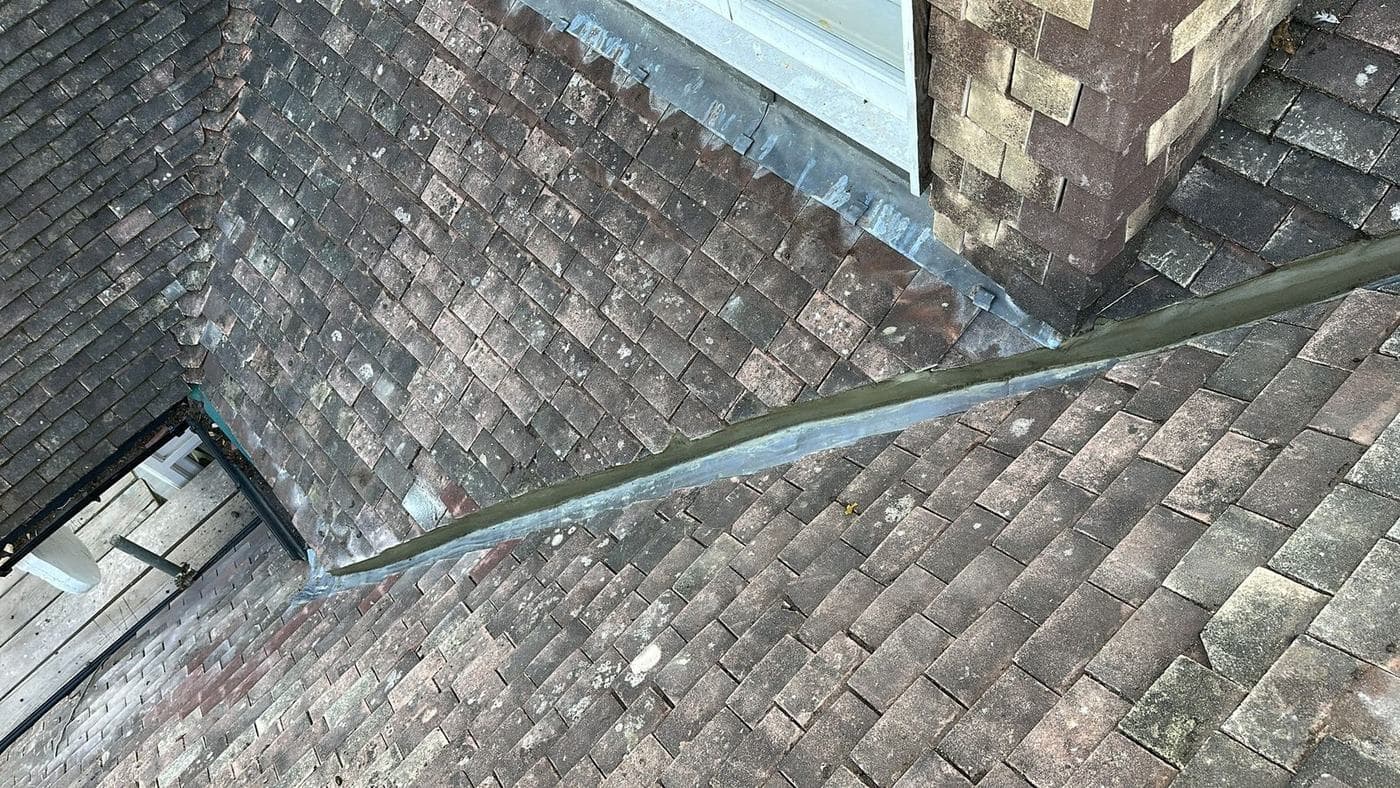
Flashing is the weatherproof seal between the stack and the roof, normally lead, dressed over the tiles at the bottom and tucked into a mortar joint in the brickwork at the top. When it lifts, cracks or pulls out of its joint, or when it has been patched with a sealant that has since split, water runs down the face of the stack and into the roof. We covered how flashing works, and why temporary patches rarely last, in what flashing is and why it matters.
On plenty of older houses there is no lead at all, just a cement fillet, a sloping band of mortar between the stack and the tiles. Fillets crack as the roof and the stack move against each other. On most houses the lasting repair is properly dressed lead. On older and historic buildings, though, conservation guidance from the Society for the Protection of Ancient Buildings favours keeping traditional mortar fillets and renewing them in lime mortar, so on a period property that is a conversation worth having rather than an automatic swap.
The back of the stack deserves its own mention. On the uphill side there is usually a small lead gutter, the back gutter, which catches the water running down the roof and turns it around the stack. Leaves, moss and debris collect in it, the water backs up behind them, and it finds a way in. It cannot be seen from the ground, so it is easily missed.
A flashing or back gutter leak usually shows as staining on the ceiling beside the chimney breast, or on the chimney breast in the top floor room, appearing during or soon after rain and often worst when the wind comes from one particular direction.
Cracked flaunching and open pots
The top of the stack is finished with flaunching, a sloping bed of mortar that holds the pots in place and throws water off. It takes more weather than any other part of the house, and once it cracks, water gets into the top of the stack and soaks down through the masonry. Failing flaunching is also how chimney pots work loose. Bradford Council's homeowner guide to chimneys puts it plainly, saying that flaunching decays quickly and that if it is loose, cracked or crumbling it should be carefully cleaned off and the pots re-set in new flaunching.
An open pot on a flue nobody uses is a simpler problem. Rain just falls down it. The usual sign is damp, sooty water or debris in the old fireplace, or a damp patch low down on the chimney breast, after heavy rain.
Porous brickwork and pointing
A stack in poor condition can let water through its own walls. Worn pointing, cracked bricks and bricks that have lost their face to frost all absorb rain, and a stack that is wet right through will carry damp down into the house below. On older properties, hard cement pointing on soft bricks makes it worse, because water that should dry out through the joints is pushed out through the brick instead, which is why SPAB advises lime based mortar for repointing older chimneys.
This kind of leak tends to build slowly, with damp spreading across the chimney breast after long spells of wet weather rather than every shower, and it is usually worst on the side that takes the weather.
When it is condensation, not a leak
When a fireplace is blocked up and the pot is capped solid, the flue is sealed at both ends. The masonry still holds moisture, and with no air moving through the flue that moisture condenses inside it. On the way out it picks up decades of soot and tar and comes through the plaster as brown stains, sometimes with a faint smell of old fires. Bradford's guide makes the point that flues should not be blocked at the top and bottom, and that a well ventilated flue is kept dry by warm air rising through it.
The giveaway is timing. Condensation staining appears in cold weather, does not follow the rain, and carries on spreading through a dry spell. A leak follows the weather.
Capping an unused flue with a ventilated cowl and fitting a vent at the bottom works better than sealing it solid, because a sealed flue keeps hold of the moisture already in the masonry and moves the damp somewhere else rather than ending it. SPAB says the same thing, that disused flues can be capped to keep out birds and help prevent damp, provided some ventilation is maintained.
One safety point matters more than anything else here. Never cap or block a flue that serves a working fire, stove or boiler. If the chimney is in use, have it swept and checked, and make sure any cowl fitted is designed for that appliance.
Finding the actual source
You can usually narrow it down from inside the house before anyone looks at the roof.
- Staining on the ceiling beside the stack, during or after rain, points to the flashing or the back gutter
- Water or debris in the fireplace after heavy rain points to an open pot
- Damp spreading slowly across the chimney breast after long wet spells points to the stack itself or its flaunching
- Brown tar stains in cold weather that ignore the rain point to condensation in a sealed flue
From there, a look at the stack confirms it. We check the flashing and the back gutter, the flaunching and the pots, and the condition of the brickwork and pointing. If the damp could be coming from somewhere other than the chimney, our guide to what causes damp patches on ceilings and walls covers the other usual suspects.
Most chimney leaks are repairs rather than rebuilds. Re-dressing the lead, clearing and relining a back gutter, re-setting the pots in new flaunching, fitting a vented cap and repointing the stack are all modest jobs compared with the damage a leak does to ceilings, plaster and roof timbers if it is left through a winter.
Getting it sorted
The team at Rated Roofers and Builders has over 25 years in roofing and building, working across Surrey and South London. Our chimney repairs cover everything from re-leading flashings and re-setting pots to brickwork and repointing on stacks that have started to let water through, alongside general roof repairs when the problem turns out to be elsewhere. Whether you are in Sutton, Bromley or anywhere else we cover, contact us and we will find where the water is getting in before we suggest fixing anything.
Need this doing
Chimney Repairs