How to spot roof damage
6 min readReece Francis, Roofer
On this page (22)
- 01Why Early Roof Damage Matters
- 02Slipped or Missing Roof Tiles
- 03Cracked or Broken Tiles
- 04Moss Growth and Moisture Problems
- 05Leaks and Internal Water Stains
- 06Damaged Flashing Around Chimneys
- 07Sagging Roof Areas
- 08Problems with Flat Roofs
- 09Blocked Gutters and Overflowing Water
- 10Signs Inside the Loft
- 11Storm Damage and Wind Exposure
- 12Ageing Roof Materials
- 13Loose Ridge Tiles and Daylight in the Loft
- 14Rotting Fascias and Soffits
- 15When Roof Damage Cannot Wait
- 16Building Regulations and Roofing Standards
- 17Planning Roofing Work Properly
- 18Energy Efficiency and Roof Condition
- 19Safety and Professional Inspections
- 20Real World Perspective
- 21Trusted Roofing Advice
- 22Conclusion
How to Spot Roof Damage on Your Building
Knowing how to identify roof damage early can save homeowners thousands of pounds in repair costs. In many cases, roofs show warning signs long before serious leaks or structural problems appear. The challenge is that most people do not know what to look for until the issue becomes obvious indoors.
From working with clients across South London and Surrey, we’ve found that the majority of major roofing repairs started as relatively small problems that were missed or ignored. In our experience, regular visual checks work better than waiting for visible leaks because water damage usually spreads beneath the roof covering long before it appears inside the home. Over the last two years, we’ve completed more than 200 inspections where early detection could have reduced the overall repair cost significantly.
Why Early Roof Damage Matters
Roof damage rarely stays isolated. Once water enters the roof structure, it gradually affects insulation, timber and surrounding materials.
A common mistake homeowners make is assuming that if there is no visible leak, the roof is still performing properly. However, what actually tends to happen is moisture travels through the roof space before showing signs indoors.
In practice, by the time damp patches appear on ceilings, the problem has often been developing for months.
Slipped or Missing Roof Tiles
One of the clearest signs of roof damage is slipped or missing tiles.
Strong winds, ageing fixings and frost damage can all cause tiles to shift out of place. Once gaps appear, water can enter beneath the surface and weaken surrounding materials.
From working on properties throughout Surrey, we’ve found that roof edges and ridge areas usually show movement first because they face the strongest wind exposure.
Our roof repairs service regularly resolves tile damage before it develops into more serious structural problems.
Cracked or Broken Tiles
Cracked tiles are another common warning sign.
Small cracks may seem harmless initially, but they allow moisture to penetrate beneath the tile surface. During winter, trapped water freezes and expands, which gradually worsens the damage.
In our experience, replacing cracked tiles early works better than temporary patch repairs because it restores the roof’s waterproof protection properly.
Moss Growth and Moisture Problems
Heavy moss growth often indicates underlying roof damage risks.
Moss traps moisture against the roof surface and slows water runoff. Over time, this increases the likelihood of tile deterioration and frost related cracking.
Our moss removal service frequently reveals hidden tile damage beneath thick moss buildup.
From working on older roofs across South London, we’ve found that shaded properties surrounded by trees tend to deteriorate faster when moss is left untreated.
Leaks and Internal Water Stains
Water stains on ceilings or walls are among the most obvious signs of roof damage.
However, the visible stain is not always directly beneath the source of the leak. Water often travels through loft spaces and along timber before appearing indoors.
In practice, what we often see is homeowners repairing the visible area inside without addressing the roof issue causing the leak.
Early professional inspection helps locate the true source of the problem.
Damaged Flashing Around Chimneys
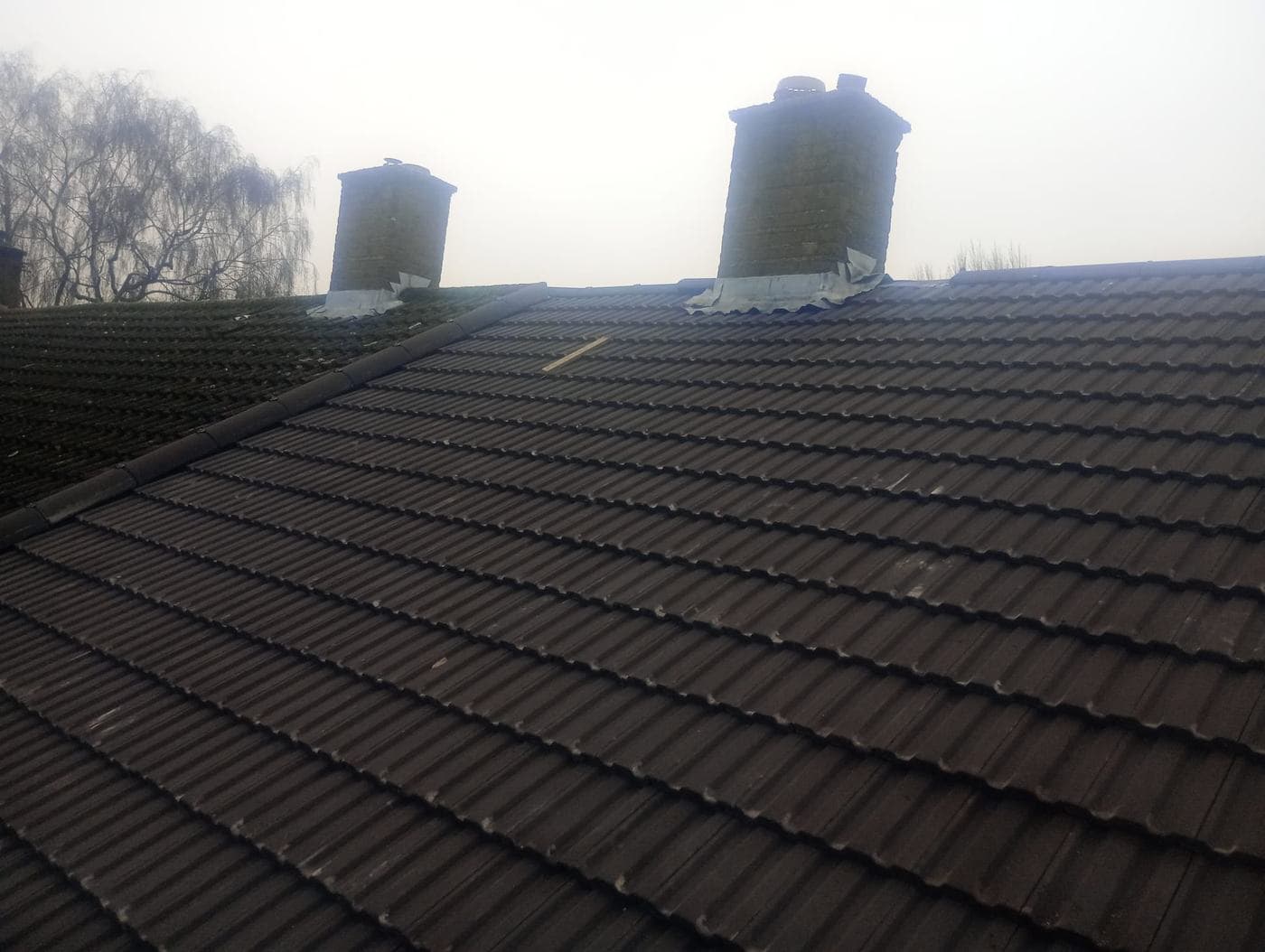
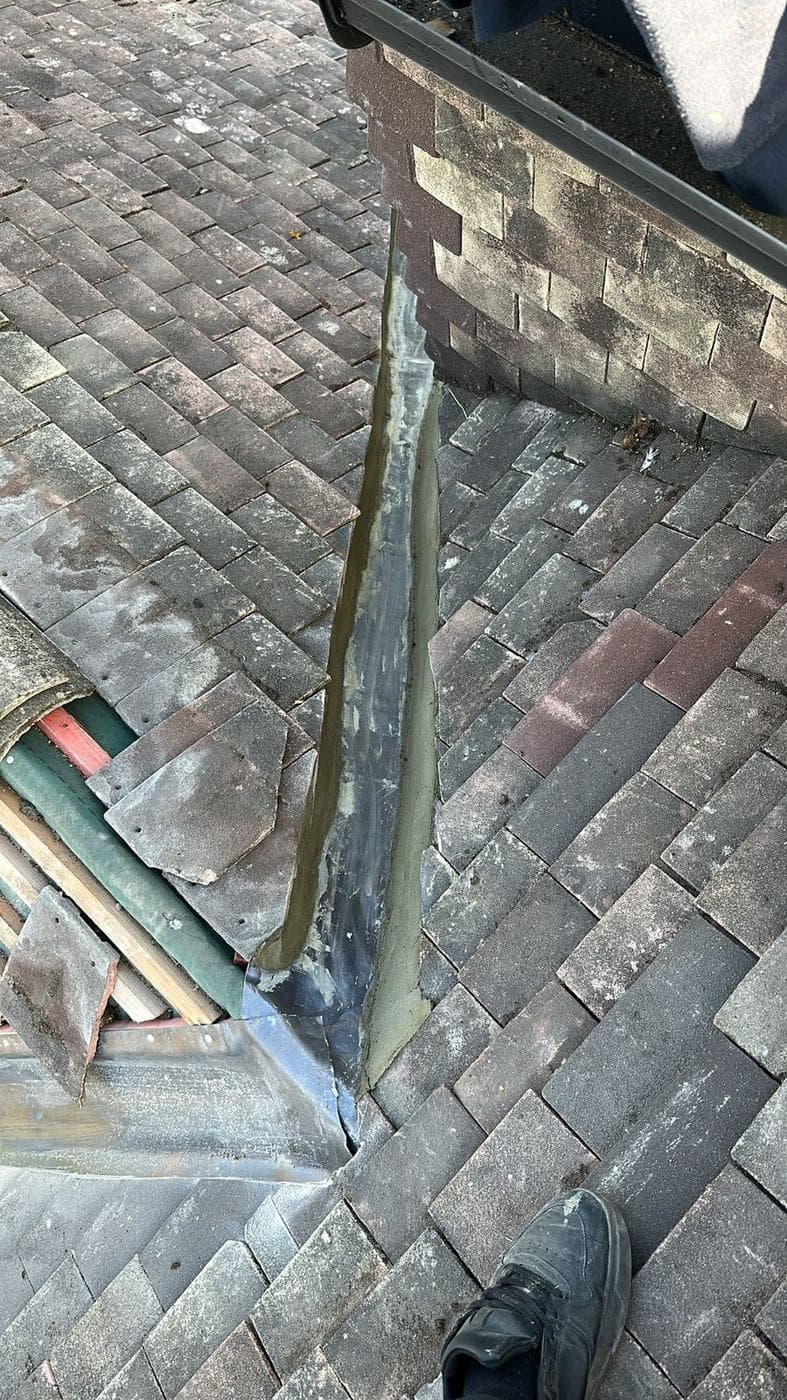
Flashing protects vulnerable roof junctions, especially around chimneys and valleys.
When flashing cracks, lifts or corrodes, water enters quickly during rainfall.
Our chimney repairs service regularly resolves leaks caused by failing flashing rather than damaged tiles themselves.
In our experience, chimney flashing problems are one of the most commonly overlooked causes of roof damage.
Sagging Roof Areas
A sagging roofline usually indicates more serious structural damage.
Sagging often develops when moisture weakens the timber beneath the roof covering. This problem requires immediate professional assessment because structural movement can worsen quickly.
From working on roof replacement projects across more than 200 properties in Surrey, we’ve found that sagging rarely appears suddenly. Instead, it develops gradually after long-term water penetration.
Problems with Flat Roofs
Flat roofs show roof damage differently from pitched roofs.
Pooling water, cracks in the membrane and lifting edges often indicate deterioration. Because flat roofs drain more slowly, small defects can quickly become larger leaks.
Our flat roofs service regularly addresses drainage and membrane issues before widespread damage develops.
In our experience, modern flat roof systems with proper drainage perform significantly better long term than older felt systems.
Blocked Gutters and Overflowing Water
Gutters play an important role in protecting the roof and property.
Blocked gutters cause rainwater to overflow onto roof edges and walls. Over time, this damages fascias, soffits and surrounding roofing materials.
Our soffits and fascias service often identifies water damage caused primarily by neglected guttering rather than failed roof coverings.
Regular gutter maintenance helps prevent avoidable roof damage.
Signs Inside the Loft
The loft often reveals roof damage before the rest of the property.
Signs to look for include:
- Damp insulation
- Water staining on timber
- Visible daylight through the roof
- Condensation buildup
- Musty smells
In practice, checking the loft after heavy rain often reveals early warning signs before leaks become visible downstairs.
Storm Damage and Wind Exposure
Storms are one of the leading causes of sudden roof damage in the UK.
High winds loosen tiles, damage ridge mortar and expose vulnerable roof sections.
From working on emergency callouts after winter storms, we’ve found that roofs with existing minor defects usually suffer the greatest storm damage because weak areas fail first.
This is why routine maintenance remains so important.
Ageing Roof Materials
Even well maintained roofs eventually deteriorate with age.
Tiles become brittle, mortar weakens and underlay loses effectiveness over time. Older roofs often develop multiple small issues simultaneously.
Our new roofs service often becomes necessary when repairs are no longer cost effective due to widespread ageing.
In our experience, replacing an ageing roof early works better than repeated reactive repairs because it prevents ongoing disruption and escalating costs.
Loose Ridge Tiles and Daylight in the Loft
Ridge tiles run along the top of the roof and take the most wind. If the mortar under them is cracked or falling out, or a ridge tile looks out of line from the ground, it may be loose, and a ridge tile coming off in a storm is both a leak and a danger to anyone below. Inside, daylight showing through the roof from the loft means there is a gap in the covering or the underlay that rain can find too. Both are straightforward roof repairs when they are caught early.
Rotting Fascias and Soffits
The boards along the eaves carry the gutters and close off the roof space. Flaking paint, soft or crumbling timber, or gutters pulling away from the boards usually mean water has been getting behind them for some time, often from an overflowing gutter or worn felt at the eaves. Our soffits and fascias and guttering pages cover the repairs.
When Roof Damage Cannot Wait
Most of the signs above need booking in rather than an emergency visit. A few cannot wait. Water coming through a ceiling, several tiles or a ridge missing after a storm, a roofline that has started to sag, or flashing torn away from a chimney all need attention straight away, because the next downpour or gust makes them worse. Our emergency roof repairs page explains what to do while you wait for someone to get there.
Building Regulations and Roofing Standards
Roofing work must comply with the GOV.UK Building Regulations, especially where structural work or large scale repairs are involved.
A full re-roof normally needs Building Regulations approval, as do structural alterations and a new covering that adds 15 per cent or more to the weight of the roof. Your roofer or you apply for it before work starts, either to the council's building control team, which you can find through Local Authority Building Control, or to a registered building control approver. Repairs affecting less than half of the roof do not normally need an application.
Professional roofing contractors ensure repairs meet current standards properly.
Planning Roofing Work Properly
Most repairs do not require planning permission. However, larger structural changes or material alterations may need approval.
The Planning Portal roofing permission guidance explains when planning permission may apply.
Checking this before major work begins helps avoid delays.
Energy Efficiency and Roof Condition
Roof damage often affects energy efficiency as well.
Wet insulation loses effectiveness quickly, which increases heat loss and heating costs.
According to the Energy Saving Trust, maintaining roof insulation properly helps improve energy efficiency significantly.
Fixing roof damage early helps preserve insulation performance.
Safety and Professional Inspections
Inspecting roofs safely requires proper equipment and training.
Professional roofers follow guidance from the Health and Safety Executive and the HSE Working at Height guidance to ensure inspections and repairs are carried out safely.
Attempting to inspect a damaged roof without proper access equipment can be dangerous.
Real World Perspective
One thing we consistently see is homeowners focusing only on visible leaks. However, in our experience, the most expensive roof damage often develops quietly beneath the surface before obvious signs appear indoors.
Regular inspections, early repairs and preventative maintenance consistently reduce long-term repair costs and extend roof lifespan.
Trusted Roofing Advice
Choosing the right roofing contractor matters when identifying roof damage accurately. We are listed on Checkatrade, where genuine customer reviews reflect our workmanship and roofing experience.
Conclusion
Learning how to spot roof damage early helps homeowners avoid expensive repairs and protect their property long term. Slipped tiles, moss growth, leaks and damaged flashing are all warning signs that should not be ignored. In our experience, acting early consistently prevents more serious structural problems later.
If you are concerned about the condition of your roof or would like a professional inspection, you can contact us here. At Rated Roofers & Builders, we provide honest, experience driven roofing services across South London and Surrey and are always happy to help protect your home.
Need this doing
Roof Repairs