Are Flat Roofs Reliable?
7 min readReece Francis, Roofer
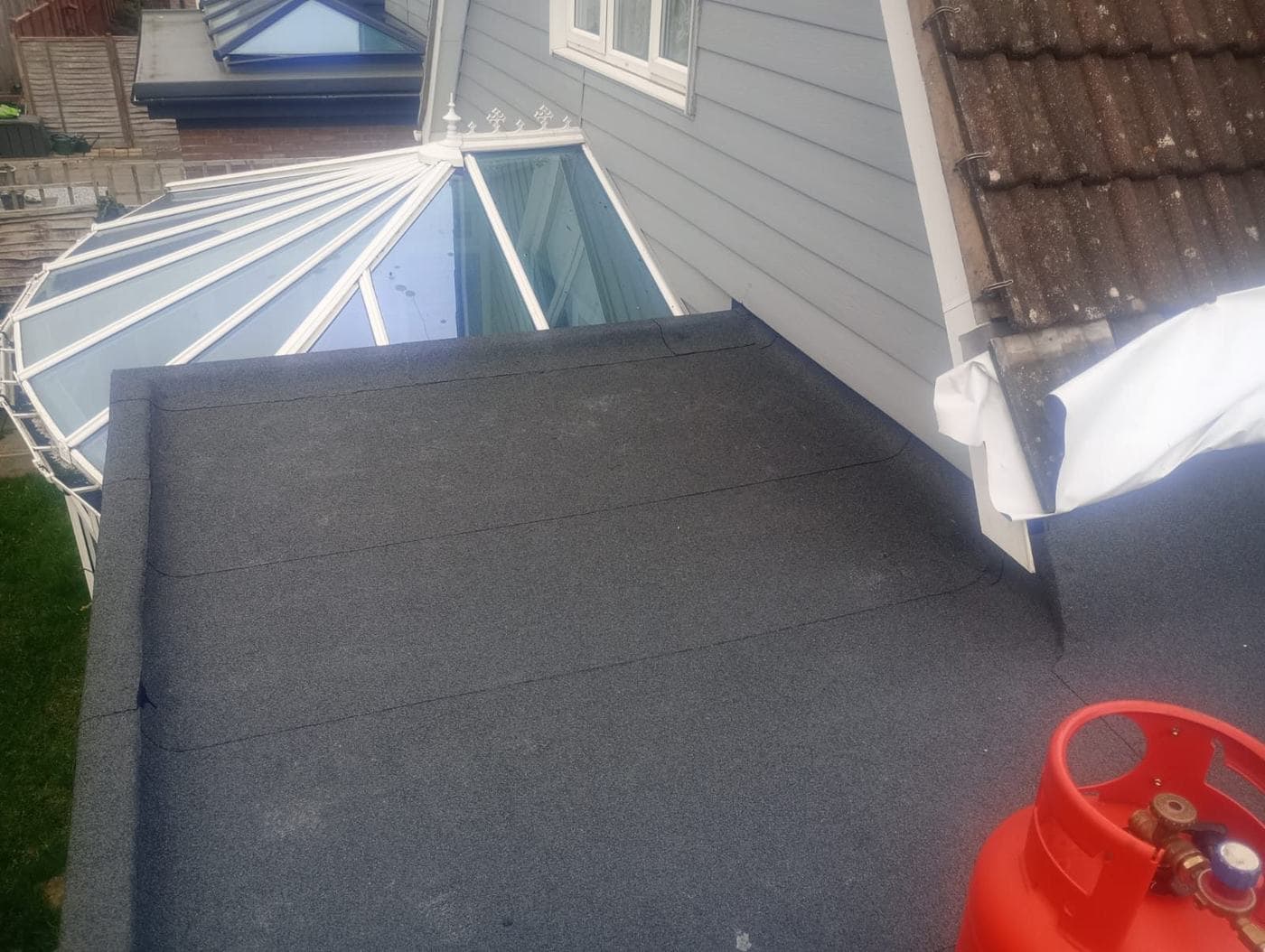
Yes, a modern flat roof is reliable, provided it has been designed with the correct falls and installed properly at the edges and junctions where nearly all flat roof problems begin. The idea that flat roofs are inherently leaky is out of date. It comes from the cheap single-layer felt roofs fitted to garages and extensions in the 1960s and 1970s, which had short lifespans and failed visibly, and the reputation has stuck long after the materials moved on. Today’s systems, fitted to the right standard, routinely last for decades.
The more useful way to think about it is that reliability has almost nothing to do with the roof being flat and almost everything to do with three factors. The waterproofing system used, whether the roof drains properly, and the quality of the installation at the detailing. Get those right and a flat roof is every bit as dependable as a pitched one. Get any of them wrong and it will leak, regardless of how expensive the membrane was. The rest of this article explains what separates a reliable flat roof from an unreliable one, so you can tell the difference before committing to any work.
A flat roof is never actually flat
This is the single most important thing to understand, and it is the point most homeowners have never been told. A flat roof has to have a fall. If water cannot run off, it sits in pools, and standing water is what destroys flat roofs.
The recognised UK standard, BS 6229, defines a flat roof as one with a pitch no greater than 10 degrees, and it sets out how much fall is needed. The finished roof should have a slope of at least 1 in 80, which is 12.5mm of drop for every metre. Because timber decks deflect slightly and no site is built to perfect tolerances, good practice is to design to a steeper 1 in 40, around 25mm per metre, so that the finished 1 in 80 is actually achieved once everything settles.
When a roof has too little fall, or a dip that holds water, you get ponding. From working with clients on older extensions, ponding is behind a large share of the flat roof failures we are called out to. Standing water accelerates the ageing of the membrane, it presses the deck down so the dip deepens and holds even more water, and it invalidates the guarantee on many roofing systems. A flat roof laid genuinely level, with no fall at all, was fitted wrong, whatever it happens to be covered with.
The materials, and how long they last
There are four systems you are likely to be offered, and they behave very differently over time.
Built-up felt, the traditional option, is the cheapest to install and the shortest lived, typically lasting around 10 to 20 years. Modern torch-on felt is a real improvement on the old single-layer felt that gave flat roofs their bad name, but felt still relies on bonded laps, and those laps are where it tends to fail.
EPDM rubber is a synthetic membrane laid, on a simple roof, as a single sheet. That is its great advantage, because a one-piece sheet has no seams across the main area of the roof, and seams are the usual weak point. Quoted lifespans vary between sources, but it is commonly put at around 25 to 50 years.
GRP fibreglass is a liquid resin that cures to a hard, seamless surface. It stands up well to foot traffic and suits complex shapes with lots of upstands and outlets, and it typically lasts in the region of 25 to 40 years.
Single-ply membranes such as PVC and TPO are welded sheets more common on larger and commercial roofs, generally lasting around 25 to 35 years.
In our experience, EPDM on a simple rectangular extension roof works better than built-up felt because it goes down as a single sheet, which removes the field seams and laps that are usually the first thing to fail on a felt roof. We’ve found that on roofs which will be walked on, or which have a complicated shape, GRP earns its higher cost, because its hard surface takes foot traffic that would mark or split a softer membrane. There is no single best system. The right one depends on the size and shape of the roof, whether anyone will walk on it, and how long you intend to keep it.
Why flat roofs actually fail
Almost every flat roof failure we see traces back to one of a handful of causes, and the membrane itself is rarely the first thing to go.
The most common is poor detailing at the edges, upstands, and around outlets. This is where the flat surface meets a wall, a parapet, a rooflight, or a drain, and it is the hardest part to get right. A membrane can be sound across the whole roof and still let water in at a badly formed upstand. This is exactly why installation quality matters more than the brand on the tin.
Ponding from inadequate falls, covered above, is the next. Then there is foot traffic, where someone accessing an aerial or a boiler flue damages a membrane never designed to be walked on. Thermal movement plays a part too, as the roof expands and contracts through the seasons until a rigid or poorly fixed covering cracks. And blocked outlets are a quiet killer, because a single leaf-clogged drain turns a properly falling roof into a paddling pool. Water is the thread running through all of it, and understanding what damages a roof most is the key to keeping a flat roof reliable rather than reacting once it leaks.
Warm roofs, cold roofs, and the rule that catches people out
Modern flat roofs are usually built as warm roofs, with the insulation above the structural deck and a sealed vapour control layer below it to keep condensation away from the timber. Older cold roof designs, with the insulation between the joists and a void above, rely on ventilation to work and are more prone to condensation problems if that ventilation is missing or blocked.
There is also a building regulations point that catches a lot of homeowners out, and it is worth knowing before you gather quotes. Simply stripping and re-covering a flat roof usually counts as renovating a thermal element under Part L, which means the roof normally has to be brought up to current insulation standards at the same time, rather than just re-waterproofed like for like. In practice, a bare re-felt is often not compliant on its own. You can read the official position on insulation and thermal elements on the Planning Portal. A contractor who quotes to strip and re-cover without mentioning insulation at all is either cutting a corner or does not know the rules, and both are worth avoiding.
Repair or replace
When a flat roof leaks, the honest answer to whether it needs repairing or replacing depends on why it failed. A single damaged upstand on an otherwise sound roof is a repair. A felt roof at the end of its life, with ponding and several failed laps, is throwing good money after bad if you keep patching it. As a rough guide, once the same flat roof needs its third repair in a couple of years, replacement usually works out cheaper than continued callouts. The same logic that applies to whether it is better to repair or replace an ageing roof applies squarely to flat roofs.
Making a flat roof reliable
The systems are reliable. What makes an individual roof reliable is correct falls so water clears, the right system for how the roof will be used, careful detailing at every junction, and outlets that are kept clear. A ten minute check twice a year, clearing debris from the drainage points and looking over the upstands, prevents most of the failures we are called out to.
Why choose us
Rated Roofers and Builders fits and repairs flat roofs across South London and Surrey, alongside roof repairs and full new roofs. We are a family run business with over 25 years in roofing and building and more than 50 successful projects completed. We are fully insured with public liability cover and Google Guaranteed, and all our work carries a company guarantee. We also run a 24 hour emergency callout for active leaks and storm damage.
Quotes are free and come with a proper explanation of what we found and why we are recommending it, which lets you compare us fairly against anyone else you ask.
What to do next
If your flat roof is leaking or ponding, photograph it from a safe vantage point so you have a record of its condition, and avoid climbing onto it, both because falls from height are dangerous and because walking on a compromised flat roof can make the damage worse. Then have it assessed by someone who will look at the falls and the detailing, not just the surface.
For a straight answer on whether your flat roof can be repaired or needs replacing, get in touch or request a free quote.
Need this doing
Flat Roofs
Felt, EPDM rubber and fibreglass laid to proper falls.