Roof insulation services Croydon
6 min readReece Francis, Roofer
On this page (9)
Roof insulation services Croydon
Roof insulation is one of the most cost-effective improvements you can make to a Croydon home, because in an uninsulated house around a quarter of all heat is lost through the roof. Fixing that is cheaper than almost any other energy measure, and for most homes the answer is straightforward, which is a cold loft insulated to a depth of 270mm at ceiling level. For loft conversions and flat-roofed extensions the approach is different, using a warm roof with the insulation at the rafter or deck level instead. Getting the right one for your property, to the right depth, is what turns a cold, expensive house into a warmer, cheaper one.
Two things decide whether roof insulation performs. The first is depth, because current Building Regulations expect a finished 270mm of mineral wool or the equivalent in a denser board, and a lot of Croydon lofts fall well short of that. The second, and the one most often missed, is ventilation. Insulation slows heat escaping, but it also makes the cold side of the roof colder, so without proper airflow you trade a heat-loss problem for a condensation problem. Both are covered below, along with which type suits which kind of Croydon property.
Why roof insulation is worth doing
Heat rises, so an uninsulated or under-insulated roof is where a home loses warmth fastest. The Energy Saving Trust puts the figure at around a quarter of all heat in a home with no loft insulation, which is why topping up a bare loft usually pays back faster than any other single measure. It also cuts summer overheating in rooms directly under the roof, and it makes the whole house easier to keep at a steady temperature.
From working with clients on the older terraces around Thornton Heath, Addiscombe and South Norwood, the lofts we open are frequently either bare boards or a thin, flattened layer laid decades ago and long past its best. Those are the homes where insulation makes the biggest difference, because the first layers do almost all of the work. A 1930s semi in Purley or Coulsdon that already has 100mm is still worth topping up, but the saving is smaller because most of the easy gain was captured years ago.
The main types of roof insulation
Cold loft insulation at ceiling level. For the majority of Croydon houses with an unused loft, this is the right choice. Mineral wool is laid between the ceiling joists and then a second layer across them at right angles, to reach the 270mm depth and break the path of heat through the timber. It is the cheapest option, and it keeps the loft easy to inspect later.
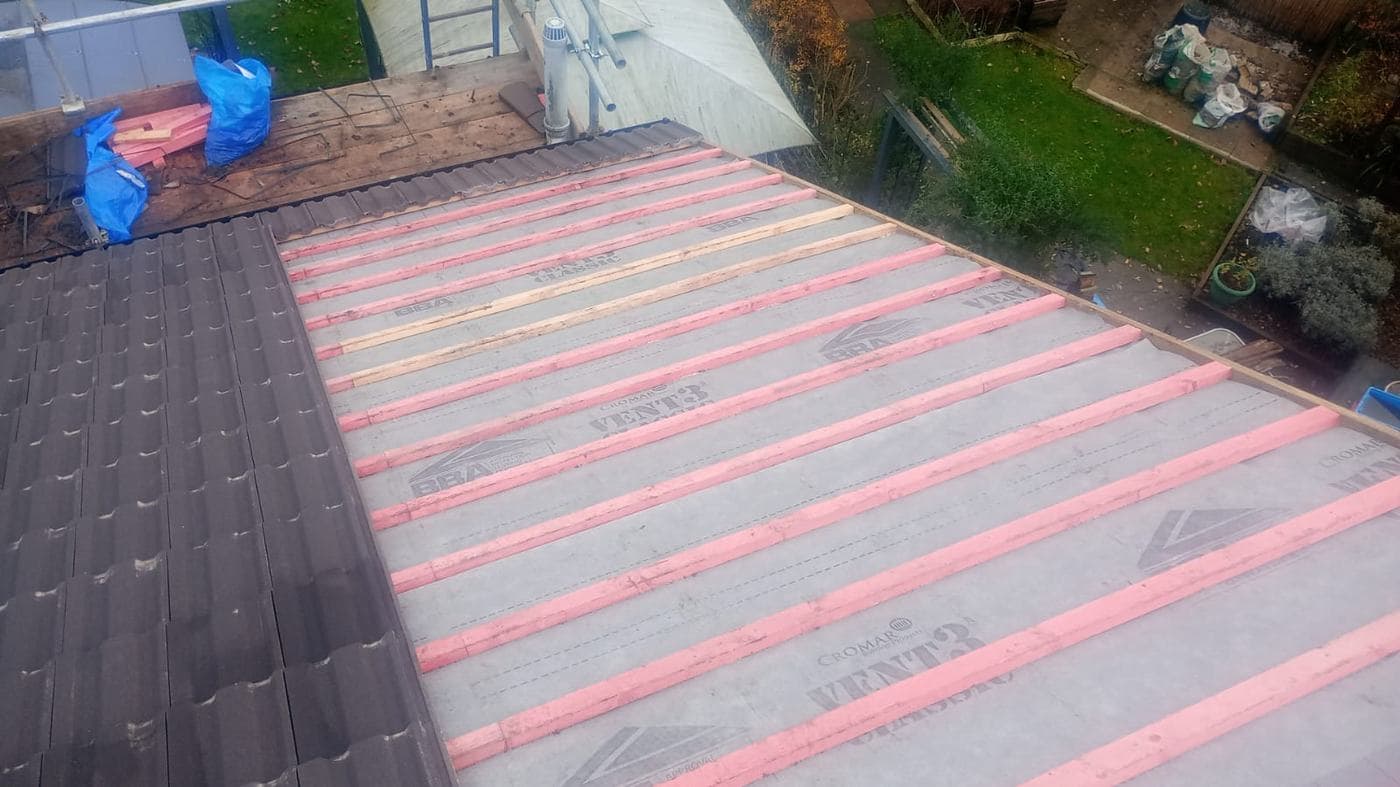
Warm roof insulation at rafter level. Where the loft is being turned into a room, the insulation moves to the slope of the roof, fitted between and under the rafters, usually in rigid boards to save space. This is standard on the loft conversions that are so common across the borough, and it has to be designed alongside ventilation to work properly.
Warm flat roof insulation. On a flat-roofed extension or dormer, insulation sits in rigid boards above the deck, under the waterproof covering, in what is called a warm deck. This is part of building a flat roof correctly rather than a separate job, and it is governed by the same Building Regulations as everything else.
In our experience, a cold loft insulated at ceiling level works better than insulating at the rafter line for a standard Croydon semi because it is cheaper, it only heats the space you actually use, and it leaves the loft simple to check and top up in future. The rafter-level approach is the right answer when the loft is becoming living space, and the wrong one when it is staying as storage.
Getting the depth and the regulations right
Current guidance under Approved Document L of the Building Regulations points to a finished 270mm of mineral wool in a standard loft, giving a U value of around 0.16 watts per square metre kelvin or better. A warm roof at rafter or deck level is usually held to about 0.18. These numbers matter because replacing or re-covering a roof counts as work on a thermal element, which means the insulation normally has to be brought up to current standards at the same time rather than left as it was.
For an independent explanation of depths, materials and the savings involved, the Energy Saving Trust’s roof and loft insulation guide is a good starting point, and it also covers whether any grants apply to your circumstances.
The condensation trap, and why spray foam is a problem
We’ve found that almost every condensation problem we are called to in a roof space traces back to insulation and ventilation being treated as separate things. When a loft is insulated but the airflow at the eaves is then blocked, warm moist air from the house meets the cold underside of the roof and condenses, and the result can look exactly like a leak. Good insulation and clear ventilation paths have to be planned together.
This is also why spray foam insulation causes so much trouble. Sprayed onto the underside of the roof, it covers the rafters completely so their condition cannot be checked, it can trap moisture against the timber, and it has become a well known cause of failed surveys and refused mortgage lending. We are one of the few firms in the area that also removes spray foam, so where it is already in place we can take it out, see what is underneath, and insulate the roof properly instead.
The best time to insulate
If your roof needs other work, that is the moment to deal with insulation. Rafter-level and warm flat roof insulation are installed as part of the roof build-up, so fitting them while the roof is open avoids paying twice. Anyone planning how to prepare for roof replacement work should factor insulation in from the start, because retrofitting it afterwards is always more disruptive. The same is true when an ageing flat roof is being replaced, since a modern warm deck brings the insulation up to standard as a matter of course.
A standalone cold loft top-up, by contrast, can be done at any time, and needs only that the loft is dry, accessible and free of any damp or pest problems that should be sorted first.
Roof insulation across Croydon
Croydon’s housing is unusually varied, and the right insulation follows the property. The dense Victorian and Edwardian terraces of Thornton Heath, Selhurst and South Norwood tend to have solid walls and often little roof insulation, so a proper loft upgrade is one of the few easy efficiency wins available to them. The interwar semis of Purley, Shirley and Coulsdon usually have some insulation that is worth bringing up to depth. The many loft conversions across the borough need rafter-level warm roofs, and the flat-roofed extensions behind terraces and semis need warm decks. Homes on the higher, more exposed ground toward the southern hills feel the benefit soonest, because they lose heat faster to begin with.
How we help
Rated Roofers and Builders handles roof insulation as part of its roofing work across South London and Surrey, whether that is a warm deck built into a flat roof, rafter-level insulation as part of a loft conversion under our extensions and conversions work, or an insulation upgrade carried out alongside a new roof. We are a family run business with over 25 years in roofing and building and more than 50 successful projects completed, fully insured with public liability cover, Google Guaranteed, and all our work carries a company guarantee.
What to do next
If your home feels hard to heat, or your roof or loft is due other work, it is worth getting the insulation looked at properly rather than guessing at depths or materials. We can tell you what your property actually needs, how it fits with any other roofing work, and how to do it without creating a condensation problem. For a straight assessment, get in touch or request a free quote.
Roofing in Croydon
We cover Croydon
Everything we do in Croydon, and how to get a price.