Is it better to repair or replace an ageing roof
So, Is It Better to Repair or Replace an Ageing Roof?
If you are wondering whether to repair or replace an ageing roof, the answer depends on its overall condition rather than its age alone. Many older roofs continue to perform well with the right maintenance, while others reach a point where ongoing repairs no longer make financial or practical sense. The key is understanding whether the problem is isolated or whether it affects the roof as a whole.
From working with clients across South London, Surrey and Sussex, we’ve found that homeowners often delay making this decision because they hope one more repair will solve the problem. In our experience, replacing an ageing roof works better than continuing with repeated repairs once multiple areas begin to fail because it removes the underlying causes rather than treating the symptoms. Over the past three years, we’ve completed more than 220 roof replacement projects, and in many of those cases the homeowners had already spent thousands of pounds on repairs that only provided temporary results.
When Roof Repairs Are the Better Option
An ageing roof does not automatically need replacing.
If the roof structure remains sound and the damage is limited to a small area, repairs can often restore the roof and extend its lifespan by many years.
Repairs are usually appropriate when:
- Only a few tiles or slates are damaged
- Storm damage is confined to one section
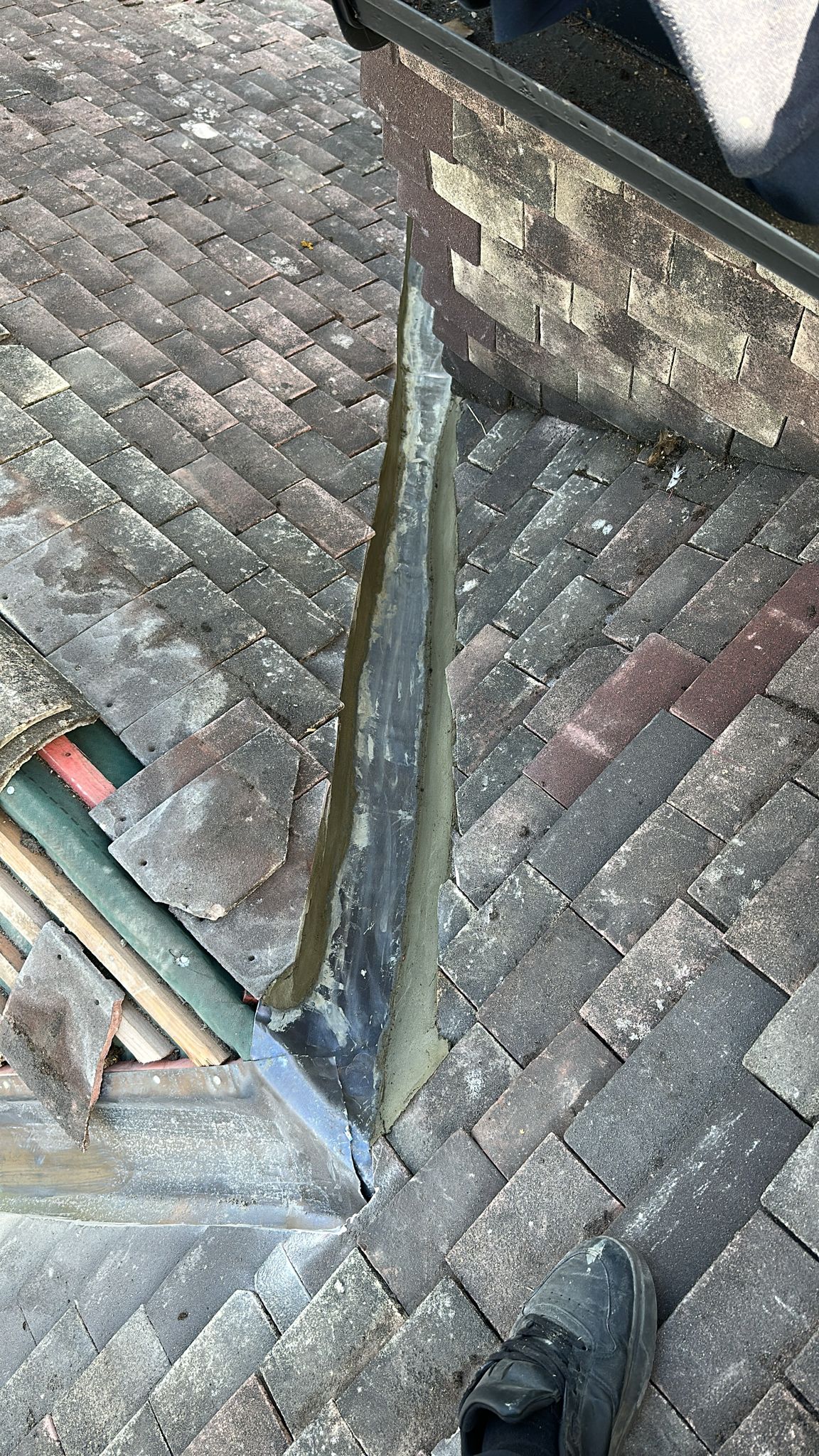
- Flashing around a chimney has failed
- Ridge mortar has started to crack
- The roof is otherwise in good condition
From working with homeowners throughout Surrey, we’ve found that dealing with these issues early often prevents more expensive repairs later.
Our roof repairs service focuses on identifying the underlying cause of the problem rather than simply fixing the visible damage.
Signs That Repairs May No Longer Be Enough
As roofs age, problems often begin appearing in several areas at once.
A common pattern we see is homeowners replacing individual tiles every year while new leaks continue appearing elsewhere.
Signs that repairs may no longer be the most sensible option include:
- Frequent roof leaks
- Widespread cracked or slipping tiles
- Failing roofing felt
- Rotten battens
- Sagging roof sections
- Increasing repair bills
In practice, once several of these problems develop together, continuing to repair the roof often becomes less economical.
The Hidden Cost of Repeated Repairs
One of the biggest mistakes homeowners make is looking only at the cost of the next repair.
What actually matters is the cumulative cost over several years.
From working with clients across South London, we’ve found that some homeowners spend the equivalent of a new roof over five or six years simply by paying for repeated repairs.
In our experience, replacing an ageing roof works better than ongoing reactive maintenance because it provides long term reliability and predictable costs.
How Roof Age Influences the Decision
Roofing materials naturally deteriorate over time.
Concrete tiles may last fifty years or more, while slate can last considerably longer when installed correctly.
However, the roof covering is only one part of the system. Battens, underlay, flashing and fixings also age.
We’ve found that many roofs appearing structurally sound from outside actually have significant deterioration beneath the tiles.
A professional inspection provides a much clearer picture than judging the roof by appearance alone.
Water Damage Beneath the Surface
One of the biggest concerns with ageing roofs is hidden moisture damage.
Water rarely enters in large amounts immediately. Instead, it slowly penetrates beneath damaged areas and affects:
- Roofing felt
- Timber battens
- Roof rafters
- Loft insulation
From working on more than 400 roof inspections over the past two years, we’ve found that hidden moisture damage is one of the main reasons older roofs eventually require replacement.
Chimneys and Flashing
Many leaks blamed on ageing roofs actually originate around chimneys.
Lead flashing gradually deteriorates and allows water to enter roof junctions.
Our chimney repairs service regularly resolves leaks that homeowners initially believed required complete roof replacement.
In our experience, replacing flashing works better than repeatedly sealing small gaps because it restores a proper waterproof barrier.
Flat Roof Considerations
Ageing flat roofs require slightly different assessment.
Problems such as standing water, membrane cracking and edge lifting often indicate that replacement may soon become necessary.
Our flat roofs service includes inspections that determine whether repairs remain viable or whether replacement offers better value.
From working with clients across Surrey, we’ve found that modern flat roofing systems generally outperform older felt roofs, particularly where drainage improvements are included.
Moss Growth and Long Term Deterioration
Heavy moss growth often accelerates the ageing process.
Moss traps moisture against roofing materials and increases frost damage during winter.
Our moss removal service helps prevent unnecessary deterioration.
We’ve found that roofs receiving regular maintenance generally remain serviceable for significantly longer than roofs where moss is allowed to accumulate unchecked.
When Roof Replacement Becomes the Better Investment
There comes a point where replacing the roof becomes the most practical solution.
Our new roofs service provides complete replacement systems designed to meet current building standards.
From working on replacement projects throughout South London, we’ve found that homeowners often notice several benefits beyond simply stopping leaks, including improved insulation, better ventilation and reduced maintenance.
In our experience, investing in a complete replacement works better than continuing with repeated repairs once the roof has multiple structural weaknesses because it provides a fresh roofing system rather than extending the life of ageing materials.
Roofing During Renovations
Many homeowners choose to replace an ageing roof while carrying out wider home improvements.
Our renovations service regularly includes complete roofing upgrades. During extensions and conversions, replacing an ageing roof at the same time often proves more efficient than returning to carry out separate work later.
From working with clients on renovation projects, we’ve found this approach reduces disruption and improves the overall finish.
Building Regulations
Major roof replacement work must comply with the GOV.UK Building Regulations.
These regulations cover structural integrity, insulation, ventilation and fire safety.
Where necessary, Local Authority Building Control may inspect the work.
Professional roofing contractors ensure all replacement work meets current standards.
Planning Permission
Most roof replacements fall under permitted development rights.
However, significant structural alterations or changes to roof appearance may require planning approval.
The Planning Portal roofing permission guidance explains when planning permission may be required.
Checking these requirements before work begins helps prevent delays.
Energy Efficiency
Replacing an ageing roof provides an excellent opportunity to improve insulation.
According to the Energy Saving Trust, upgrading roof insulation can significantly reduce heat loss.
From working with homeowners replacing older roofs, we’ve found that combining insulation upgrades with roof replacement works better than separate projects because access is already available during installation.
Many clients notice lower heating costs afterwards.
Safety and Professional Assessment
Roof inspections involve working at height and should always be carried out safely.
Professional roofers follow guidance from the Health and Safety Executive and the HSE Working at Height guidance when inspecting and repairing roofs.
Using experienced professionals ensures both accurate diagnosis and safe working practices.
Real World Perspective
One thing we consistently see is homeowners trying to delay replacement for as long as possible. While repairs absolutely make sense for isolated problems, there comes a stage where the roof reaches the end of its practical lifespan.
In our experience, replacing an ageing roof before repeated failures begin usually saves money over the long term because it avoids ongoing repair costs, emergency callouts and hidden water damage.
Trusted Roofing Advice
Choosing whether to repair or replace a roof requires honest advice based on genuine experience. We are listed on Checkatrade, where genuine customer reviews reflect the quality of our workmanship and customer service.
Conclusion
Deciding whether to repair or replace an ageing roof depends on the overall condition of the roofing system, not simply its age. Small, isolated problems can often be repaired successfully, but widespread deterioration, repeated leaks and increasing maintenance costs usually indicate that replacement offers better long term value.
If you would like an honest assessment of your roof, you can contact us here. At Rated Roofers & Builders, we provide experienced, practical roofing advice across South London, Surrey and Sussex and are always happy to help you choose the most cost effective solution for your home.

Comment (0)