What is the difference between pitched and flat roofing
So, What Is the Difference Between Pitched and Flat Roofing
If you are planning roofing work or trying to understand your current roof, one of the most common questions is the difference between pitched and flat roofing. While both types serve the same purpose, protecting your home from weather, they perform very differently in terms of structure, lifespan, maintenance and cost.
I work on both pitched and flat roofs across South London, Surrey and Sussex. In practice, what we see is homeowners often choosing a roof type based on appearance or cost alone. However, what actually matters is how the roof performs over time in real UK weather conditions. Understanding the key differences helps you make a better long term decision.
What Is a Pitched Roof
A pitched roof has a noticeable slope, allowing rainwater to run off quickly. Most traditional UK homes use pitched roofs with clay tiles, concrete tiles or slate.
Because of the angle, water drains efficiently and does not sit on the surface. This natural drainage reduces the risk of leaks and material wear.
Pitched roofs also allow for loft space, which can be used for storage or converted into living space.
What Is a Flat Roof
A flat roof has a very slight slope rather than being completely level. This slope allows water to drain slowly towards outlets or gutters.
Flat roofs are commonly used on extensions, garages and modern properties. They rely on waterproof membranes rather than overlapping tiles.
Because water drains more slowly, flat roofs depend heavily on correct installation and ongoing maintenance.
Key Structural Differences
The most obvious difference between pitched and flat roofing is the structure.
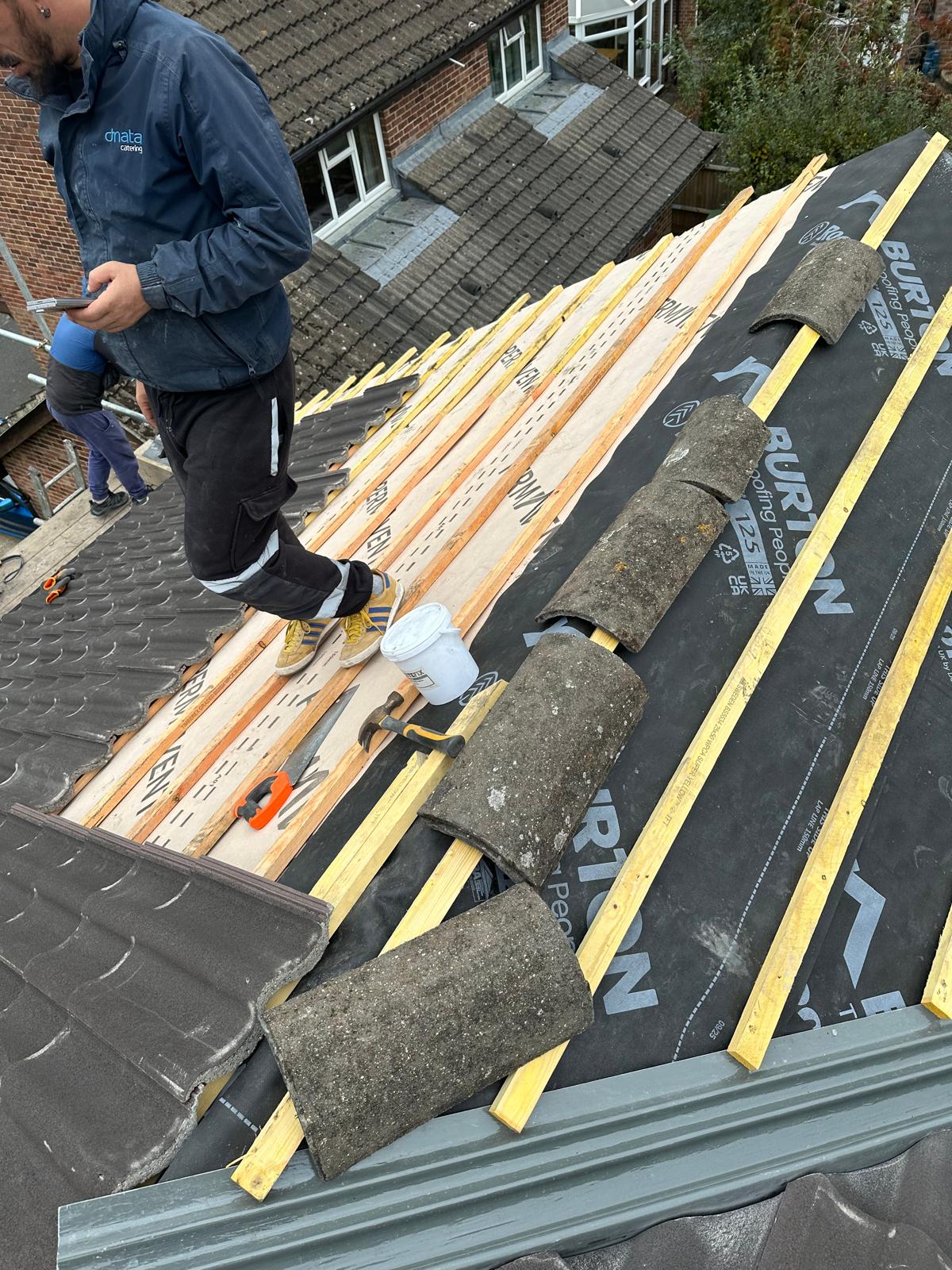
Pitched roofs use a framework of rafters that create the angled shape. Tiles or slates overlap to form a layered waterproof system.
Flat roofs use a horizontal deck covered with a waterproof membrane. The system relies on sealing rather than overlapping materials.
In practice, this structural difference affects everything from drainage to lifespan.
Drainage and Water Management
Drainage is one of the biggest differences between pitched and flat roofing.
Pitched roofs allow rainwater to run off quickly due to gravity. This reduces the chance of standing water and helps protect the roof covering.
Flat roofs drain more slowly. Therefore, they are more prone to pooling water if drainage is not designed correctly.
What we often see is flat roof issues caused by poor drainage rather than material failure. This is why installation quality matters so much.
Lifespan and Durability
Pitched roofs generally last longer than flat roofs. Tile and slate roofs can last several decades when maintained properly.
Flat roofs usually have a shorter lifespan depending on the material used. However, modern systems have improved significantly and can perform well when installed correctly.
In practice, the lifespan difference often comes down to exposure. Pitched roofs shed water quickly, while flat roofs hold moisture for longer periods.
Maintenance Requirements
Maintenance needs differ between the two roof types.
Pitched roofs typically require less frequent maintenance. Occasional tile replacement or ridge repointing often keeps them in good condition.
Flat roofs require more regular checks. Small cracks, lifting edges or drainage issues can develop over time.
Our flat roofs service often involves preventative maintenance to address issues early.
Repair Considerations
Repairs on pitched roofs often involve replacing individual tiles or fixing specific areas.
Flat roof repairs can be more complex because water may spread beneath the surface before becoming visible inside the property.
Our roof repairs service frequently identifies the true source of leaks on both roof types, which is not always where the problem appears.
Cost Differences
Flat roofs usually cost less to install initially. They require fewer materials and less labour compared to pitched roofs.
However, long term costs can vary. Flat roofs may require more frequent maintenance or earlier replacement.
Pitched roofs cost more upfront but often last longer, which can make them more cost effective over time.
A common mistake is focusing only on initial cost rather than long term value.
Suitability for Different Properties
Pitched roofs suit traditional houses and properties where long term durability is the priority.
Flat roofs work well for extensions, garages and modern designs where space and cost efficiency matter.
In practice, many homes use a combination of both. For example, a house may have a pitched main roof with flat roof extensions.
Chimneys and Roof Details
Pitched roofs often include chimneys, valleys and ridges, which require careful detailing.
Flat roofs have fewer structural features but require strong sealing around edges and joints.
Our chimney repairs service often resolves issues on pitched roofs where flashing has failed.
Building Regulations and Compliance
Both roof types must comply with the GOV.UK Building Regulations. These rules ensure proper insulation, ventilation and structural safety.
In some cases, Local Authority Building Control may inspect roofing work, particularly when structural changes are involved.
Understanding these requirements helps ensure the roof performs correctly over time.
Planning Permission Considerations
Most roofing work does not require planning permission. However, changing from a flat roof to a pitched roof, or altering roof height, may require approval.
The Planning Portal roofing permission guidance explains when permission is needed.
Checking this early prevents delays.
Energy Efficiency
Both roof types can be energy efficient when insulated properly.
According to the Energy Saving Trust, improving roof insulation reduces heat loss significantly.
Flat roofs often require careful insulation design because of their structure. Pitched roofs allow insulation at ceiling or rafter level.
In practice, upgrading insulation during roofing work often improves comfort and reduces energy costs.
Safety Considerations
Roofing work involves working at height and handling heavy materials. Professional roofers follow guidance from the Health and Safety Executive to ensure safe working practices.
The HSE Working at Height guidance outlines safe procedures for both pitched and flat roofing projects.
Which Roof Type Is Better
There is no single answer to which roof type is better. The right choice depends on the property, budget and long term goals.
Pitched roofs offer durability and lower maintenance over time. Flat roofs provide cost efficiency and design flexibility.
In practice, the best approach is choosing the roof type that suits the building rather than forcing one option to fit all situations.
Real World Perspective
One thing we regularly see is homeowners choosing flat roofs for extensions purely because they are cheaper upfront. However, without proper drainage and maintenance, these roofs often require attention sooner than expected.
On the other hand, pitched roofs rarely fail suddenly. Instead, they show gradual signs of wear, which allows for planned maintenance.
Understanding these real world outcomes helps set realistic expectations.
Trusted Roofing Advice
Choosing between roof types requires honest, experience based advice. We are listed on Checkatrade, where genuine reviews reflect the quality of our work and guidance.
Conclusion
Understanding the difference between pitched and flat roofing helps you make better decisions when planning roofing work. Pitched roofs offer durability and effective drainage, while flat roofs provide flexibility and lower upfront cost. However, installation quality and maintenance play a major role in long term performance for both.
If you are unsure which roof type suits your property or need advice on an existing roof, you can contact us here. At Rated Roofers & Builders, we provide honest, experience based roofing advice across South London, Surrey and Sussex and are always happy to help you choose the right solution.

Comment (0)