
What causes roof leaks in UK homes
So, What Causes Roof Leaks in UK Homes
Roof leaks are one of the most common issues homeowners face across the UK. Although a leak may first appear as a small stain on the ceiling or a damp patch in the loft, the underlying cause often develops over time. Because roofs sit exposed to the elements all year round, even minor weaknesses can allow water to enter. Understanding the causes of roof leaks in UK homes helps homeowners act early and prevent long term damage.
I regularly inspect properties where leaks have gone unnoticed for months. In many cases, the signs were there but easy to miss. I will explain the most common causes of roof leaks in UK homes, why they occur, and what steps help prevent them.
Broken or Slipped Roof Tiles
One of the most frequent causes of roof leaks is broken or slipped tiles. Strong winds, heavy rain and frost all contribute to tile movement over time. Once a tile shifts or cracks, it creates a direct path for water to reach the underlay and roof structure.
Although a single damaged tile may not cause an immediate leak, water gradually works its way beneath the surface. As a result, moisture builds up and eventually appears inside the home. Early replacement of damaged tiles often prevents much larger issues.
Our roof repairs service frequently resolves leaks caused by isolated tile damage when addressed promptly.
Worn or Failed Roof Underlay
Roof underlay sits beneath the tiles and provides an extra layer of protection against water. Over time, older underlay materials can become brittle, torn or degraded.
When underlay fails, water that passes through the tiles reaches the roof timbers more easily. Because underlay deterioration happens out of sight, leaks may appear suddenly after years of slow wear.
In many older UK homes, underlay failure explains why leaks occur even when tiles still look intact.
Cracked or Loose Ridge Tiles
Ridge tiles sit along the highest point of the roof and face constant exposure to wind and rain. The mortar that secures them naturally wears down over time.
Once ridge mortar cracks or crumbles, water enters the roof at its most exposed point. In addition, loose ridge tiles can shift during high winds, which increases the risk of leaks and safety hazards.
Addressing ridge issues early helps protect the rest of the roof structure.
Damaged Flashing Around Chimneys
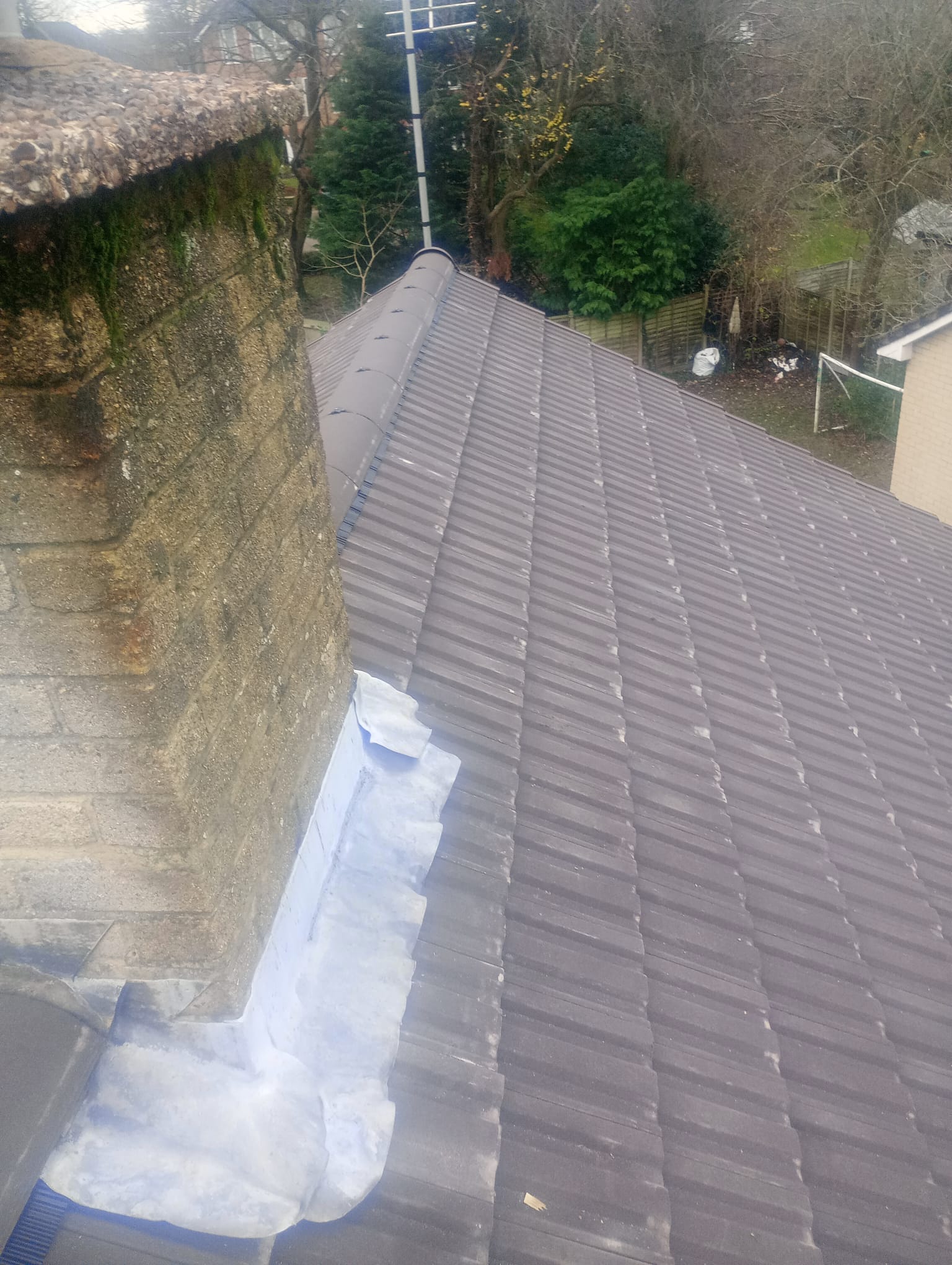
Chimneys remain one of the most common sources of roof leaks in UK homes. Flashing seals the joint between the roof and the chimney. Over time, flashing can crack, lift or pull away due to weather exposure and building movement.
When flashing fails, water runs directly into the roof structure. Because chimneys sit above living spaces, leaks often appear on ceilings below.
Our chimney repairs service often stops persistent leaks by restoring flashing and surrounding mortar rather than replacing tiles unnecessarily.
Blocked or Overflowing Gutters
Although gutters sit below the roof, they play a vital role in preventing leaks. When gutters block with leaves, moss or debris, rainwater overflows and runs back onto the roof edges.
This overflow allows water to enter beneath tiles and soak the roofline boards. Over time, moisture damages the underlay and timbers.
Regular gutter maintenance therefore plays an important role in preventing roof leaks, especially during autumn and winter.
Moss Growth and Debris Buildup
Moss growth remains a common issue on UK roofs due to the damp climate. While moss may seem harmless, it holds moisture against the roof surface.
As a result, tiles stay wet for longer periods, which increases the risk of frost damage and cracking. In addition, moss breaks down and washes into gutters, which then overflow.
Our moss removal service helps reduce moisture retention and protects roofs from gradual deterioration.
Flat Roof Deterioration
Flat roofs require a slightly different explanation. Because water drains more slowly, flat roofs are more vulnerable to leaks if defects develop.
Cracks in the surface, lifting edges or split seams allow water to enter the roof covering. Once inside, moisture spreads beneath the surface layers before becoming visible indoors.
Flat roof leaks often appear far from the original entry point. Therefore, professional inspection remains essential when leaks occur.
Poor Roof Installation
Some roof leaks occur not because of age but because of poor installation. Incorrect tile spacing, inadequate fixings or poorly installed flashing all create weaknesses.
Although these issues may not cause immediate leaks, they often lead to problems after the first severe weather event. Proper installation ensures the roof sheds water effectively and resists wind uplift.
Professional roofing standards help avoid these preventable issues.
Condensation Mistaken for Roof Leaks
Not all moisture problems come from leaks. In some cases, condensation creates similar symptoms.
Poor ventilation in the loft allows warm, moist air to condense on cold surfaces. Over time, this moisture causes damp patches, mould and dripping water that resembles a roof leak.
Identifying whether moisture comes from condensation or water ingress matters. Ventilation improvements often resolve condensation issues without roofing repairs.
Storm Damage and Extreme Weather
Severe weather events place extra stress on roofs. Strong winds lift tiles, while heavy rain tests every joint and overlap.
After storms, small defects often develop that allow water to enter. Inspecting the roof after extreme weather helps identify damage early and prevents leaks from developing.
Roof Age and General Wear
Every roof has a lifespan. Over time, materials naturally wear down. Tiles lose their protective surface, mortar weakens, and underlay deteriorates.
Older UK homes often experience roof leaks simply because materials have reached the end of their working life. In these cases, repairs may only provide short term relief.
Our new roofs service offers long term solutions when ageing roofs no longer perform reliably.
Safety and Roof Inspections
Investigating roof leaks involves working at height, which carries risk. Homeowners should avoid climbing onto roofs without proper equipment.
Professional roofers follow guidance from the Health and Safety Executive to ensure inspections and repairs are carried out safely. This approach protects both workers and homeowners while ensuring accurate assessments.
Why Early Action Matters
Roof leaks rarely improve on their own. Water entering the roof structure spreads quickly, damages insulation and weakens timber.
Acting early reduces repair costs and prevents wider structural damage. In many cases, addressing the cause of a leak early avoids the need for more extensive work later.
How Professional Inspections Help
Professional inspections identify the true cause of leaks rather than treating symptoms. This approach ensures repairs last and target the right areas.
Inspections also reveal potential future problems, allowing homeowners to plan maintenance rather than react to emergencies.
Trusted Roofing Advice
Homeowners want reassurance that advice reflects the true condition of the roof. We are listed on Checkatrade, where genuine customer reviews reflect our commitment to honest assessments and quality workmanship.
Conclusion
Understanding the causes of roof leaks in UK homes helps homeowners act early and protect their property. Broken tiles, damaged flashing, worn underlay and blocked gutters all allow water to enter over time.
If you have noticed signs of a leak or want peace of mind, you can contact us here to arrange a professional inspection. You can also connect with Rated Roofers and Builders through our business profile. We provide reliable roofing services across South London, Surrey and Sussex and are always happy to help protect your home.

Comment (0)