
So, What Should I Expect During a Roof Replacement?
What Should I Expect During a Roof Replacement
A roof replacement is one of the most significant improvements a homeowner can make. Because it protects the entire structure, replacing a roof involves careful planning, skilled work and clear communication. However, many homeowners feel unsure about what actually happens during the process. Understanding what to expect during a roof replacement helps reduce stress, set realistic expectations and ensure the work runs smoothly.
I often speak with homeowners across South London, Surrey and Sussex who feel anxious before their roof replacement begins. This guide explains each stage clearly so you know exactly what will happen and why each step matters.
When a Roof Replacement Becomes Necessary
A roof replacement usually becomes necessary when repairs no longer provide reliable protection. Repeated leaks, widespread underlay failure or ageing materials often indicate that the roof has reached the end of its lifespan.
In addition, storm damage or long term weather exposure may weaken large sections of the roof. At that stage, replacing the roof offers better value and long term security than ongoing repairs.
A professional inspection confirms whether replacement is the most sensible option.
Initial Roof Inspection and Assessment
Before any roof replacement begins, a full inspection takes place. This assessment identifies the condition of tiles or coverings, underlay, battens, flashing and roof timbers.
The inspection also checks chimney areas, roof edges and ventilation. Inside the loft, signs of moisture, damaged insulation or timber movement provide further insight.
This stage ensures the replacement addresses all underlying issues rather than simply covering them up.
Quotation and Planning Stage
Once the inspection is complete, a detailed quotation outlines the scope of work. This includes materials, labour, access requirements and timescales.
Clear planning helps avoid delays. Roof replacements often require scaffolding, skip placement and material deliveries. Organising these elements early ensures work progresses smoothly.
Homeowners should also discuss any concerns about access, noise or working hours at this stage.
Regulations and Compliance
Roof replacements must comply with current standards. The GOV.UK Building Regulations set requirements for structural integrity, insulation and ventilation.
In some cases, Local Authority Building Control may be involved to inspect work and confirm compliance. Understanding this process early prevents delays later.
Most roof replacements fall under permitted development. However, the Planning Portal roofing permission guidance explains when approval may be required, such as in conservation areas.
Preparation Before Work Begins
Before the roof replacement starts, scaffolding is erected to provide safe access. Protective sheeting may also be installed to protect gardens and neighbouring properties.
Materials are delivered in stages to reduce disruption. Homeowners may notice increased activity during this setup phase, although the main work has not yet begun.
Good preparation helps keep the project organised and safe.
Removing the Existing Roof
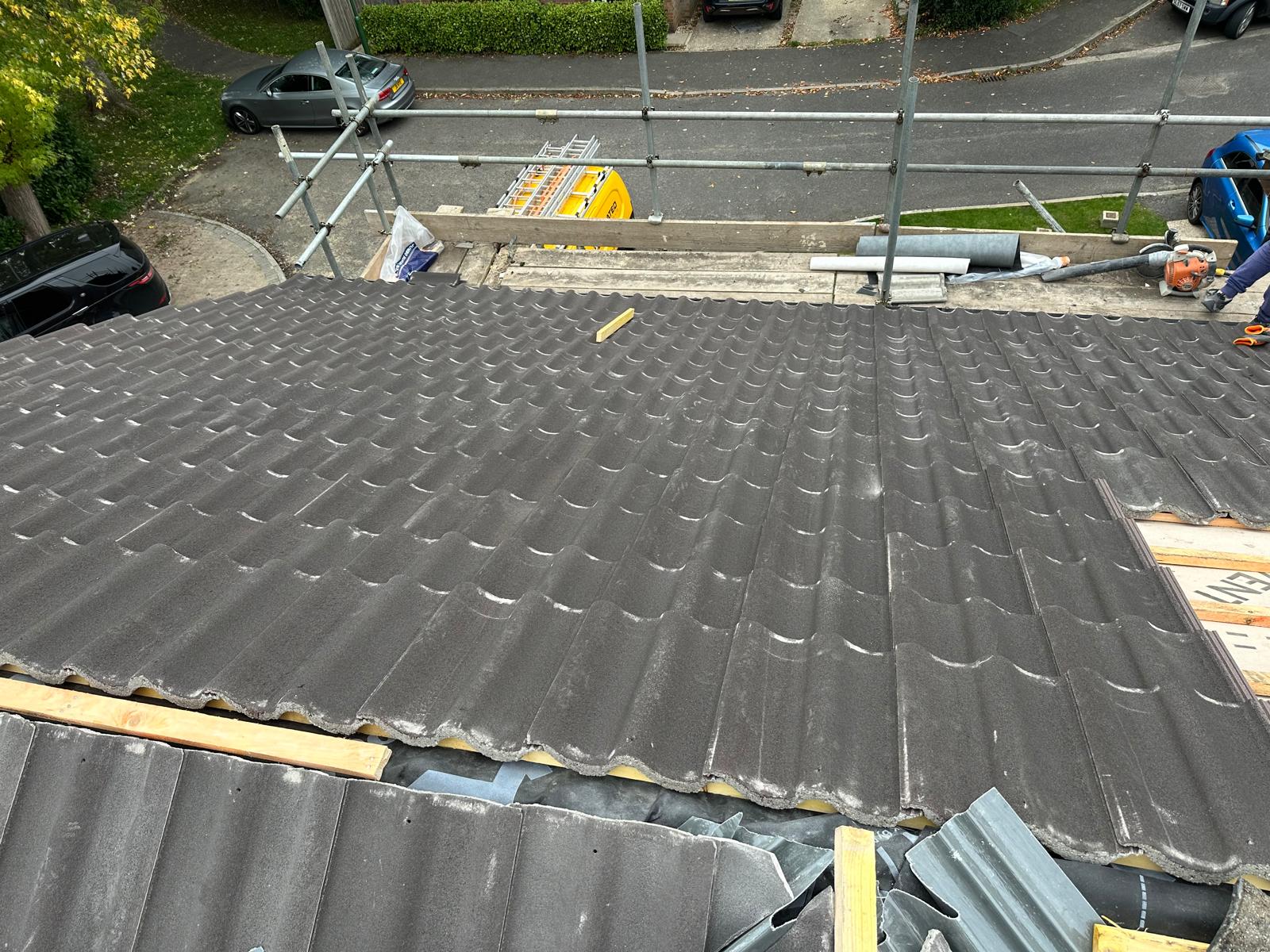
The first major stage of a roof replacement involves removing the existing tiles or roof covering. Materials are stripped back carefully to expose the underlying structure.
During this process, roofers assess the condition of battens and timbers. Any damaged components are replaced to ensure a solid base for the new roof.
Removing the old roof also allows hidden issues to be identified and addressed properly.
Installing New Underlay and Battens
Once the roof structure is exposed and prepared, new breathable underlay is installed. This layer protects the roof from moisture while allowing condensation to escape.
New battens are then fixed to support the tiles or coverings. Correct spacing and fixing ensure tiles sit securely and perform well in all weather conditions.
This stage forms the foundation of a durable roof replacement.
Fitting the New Roof Covering
After the underlay and battens are in place, the new roof covering is installed. This may involve tiles, slates or flat roofing materials depending on the property.
Each material is fitted according to manufacturer guidelines and best practice. Proper fixing prevents wind uplift and water ingress.
During this stage, progress becomes visible quickly, which often reassures homeowners.
Flashing and Detailing
Flashing is installed around chimneys, walls and roof junctions. This detailing stage plays a crucial role in preventing leaks.
Correctly fitted flashing directs water away from vulnerable joints and back onto the roof surface. Poor flashing remains one of the most common causes of leaks after roof work, so attention to detail matters here.
Ridge Tiles and Roof Finishing
Ridge tiles are fitted or re bedded to secure the roof apex. Modern fixing methods often improve durability compared to older mortar only systems.
Ventilation components may also be installed at this stage to regulate airflow and prevent condensation.
Once complete, the roof is fully weatherproof.
Flat Roof Replacement Process
If the project involves a flat roof replacement, the process differs slightly. Old coverings are removed, the deck is inspected and repaired, then the new system is installed.
Modern flat roofing systems offer improved durability and water resistance. Our flat roofs service often includes upgrades to improve drainage and lifespan.
Timescales for a Roof Replacement
Most roof replacements take between three and seven days, depending on size, complexity and weather conditions.
Unpredictable weather may cause short delays, although experienced roofers plan work to minimise disruption.
Clear communication throughout the project helps manage expectations.
Noise and Disruption
Roof replacements create noise, particularly during removal and fixing stages. However, disruption usually reduces once the main covering is in place.
Professional teams work efficiently to complete the project as quickly as possible while maintaining quality.
Safety During Roof Replacement
Roofing work involves working at height and handling heavy materials. Professional roofers follow guidance from the Health and Safety Executive to ensure safe working practices.
The HSE Working at Height guidance supports safe access, scaffolding use and risk management throughout the project.
After the Roof Replacement Is Complete
Once work finishes, all debris is cleared and scaffolding removed. The site is left tidy and safe.
Homeowners should receive confirmation of any guarantees and advice on ongoing maintenance.
Regular inspections help ensure the new roof continues to perform as expected.
Repairs Versus Replacement Revisited
Many homeowners ask whether repairs could have worked instead. In some cases, repairs extend roof life effectively. However, when damage is widespread, replacement offers better long term protection.
Our roof repairs service often assesses this balance before recommending replacement.
Choosing the Right Roofing Team
Choosing experienced roofers ensures the process runs smoothly. Clear communication, proper planning and quality workmanship all contribute to a successful outcome.
We are listed on Checkatrade, where genuine reviews reflect our standards of work and customer care.
Conclusion
A roof replacement may feel daunting, but understanding the process helps reduce uncertainty and stress. From inspection and preparation to installation and finishing, each stage plays an important role in protecting your home long term.
If you are considering a roof replacement or would like professional advice, you can contact us here. At Rated Roofers & Builders, we provide reliable roofing services across South London, Surrey and Sussex and are always happy to guide you through the process with clear, honest advice.


Comment (0)