Roof Insulation Services South London
Professional Roof Insulation Services South London
Roof insulation plays a major role in how comfortable and energy efficient a home feels. However, many properties across South London still rely on outdated or insufficient insulation. As a result, heat escapes through the roof, rooms feel colder in winter, and energy bills continue to rise. Investing in professional roof insulation services South London helps tackle these problems directly and improves the overall performance of the home.
I regularly inspect roofs where homeowners struggle with cold upper floors, condensation in the loft or high heating costs. In most cases, poor roof insulation sits at the centre of the issue. Therefore, understanding how insulation works and when to upgrade it makes a real difference.
Why Roof Insulation Matters So Much
Heat naturally rises through a property. Without effective insulation, warm air escapes through the roof almost constantly. Because of this, heating systems work harder and for longer just to maintain a comfortable temperature.
Roof insulation slows this heat loss and keeps warmth inside the living space. At the same time, it also helps prevent excessive heat entering the home during warmer months. According to the Energy Saving Trust, improving roof insulation can significantly reduce energy loss, which explains why it remains one of the most effective upgrades for older homes.
Problems Caused by Poor Roof Insulation
When insulation underperforms, several problems usually appear over time. For example, homeowners often notice:
• Cold bedrooms and upper floors
• Uneven temperatures throughout the house
• Condensation forming in the loft
• Damp smells near ceiling level
• Mould growth on walls or roof timbers
• Rising heating costs
Because these problems develop gradually, many people accept them as normal. However, once insulation improves, the difference becomes obvious almost immediately.
How Roof Insulation Works
Roof insulation traps air within its structure. This trapped air slows down the movement of heat, which helps keep warmth inside during winter. At the same time, it also limits heat transfer from outside during summer.
Most homes use one of two insulation methods. Either insulation sits on the loft floor between the joists, or it fits between the roof rafters. The correct approach depends on whether the loft remains unused or forms part of a living space.
Types of Roof Insulation Used in South London
Different homes require different insulation solutions. Therefore, choosing the right type matters.
Mineral Wool Insulation
Mineral wool remains one of the most common insulation materials. It fits between loft joists and provides reliable thermal performance. In addition, it offers sound reduction and fire resistance, which makes it suitable for many properties.
Rigid Insulation Boards
Rigid boards work particularly well in loft conversions. Because they deliver strong insulation in a thinner profile, they help maintain headroom. As a result, they suit roof spaces that people use regularly.
Spray Foam Insulation
Spray foam expands to fill gaps and seals the roof space tightly. However, it requires careful assessment beforehand. Used correctly, it improves airtightness. Used incorrectly, it can create moisture issues.
Multi Layer Foil Insulation
Foil insulation reflects heat and works well where space remains limited. Often, it works best when combined with another insulation method.
When Roof Insulation Should Be Upgraded
Many South London homes still fall below modern insulation standards. In particular, older insulation often compresses, becomes damp or fails to meet current depth recommendations.
You should consider upgrading insulation if you notice:
• High heating bills without explanation
• Cold draughts from the loft
• Condensation on roof timbers
• Insulation that looks patchy or flattened
• Loft insulation depth below current guidance
Once insulation improves, homes usually feel warmer and more consistent almost straight away.
Building Regulations and Roof Insulation
Roof insulation upgrades must comply with current standards. The GOV.UK Building Regulations set clear requirements for thermal efficiency, airflow and moisture control. These rules ensure insulation improves performance without creating condensation problems.
Following these standards protects the property and ensures the work meets legal requirements.
Ventilation and Moisture Control
Insulation and ventilation must work together. Without proper airflow, warm moist air becomes trapped in the roof space. Consequently, condensation forms and damages insulation and timber.
During insulation work, maintaining airflow at the eaves remains essential. In some cases, improving ventilation requires roofline upgrades. Our soffits and fascias service often supports insulation improvements by allowing fresh air to circulate correctly.
Roof Condition Comes First
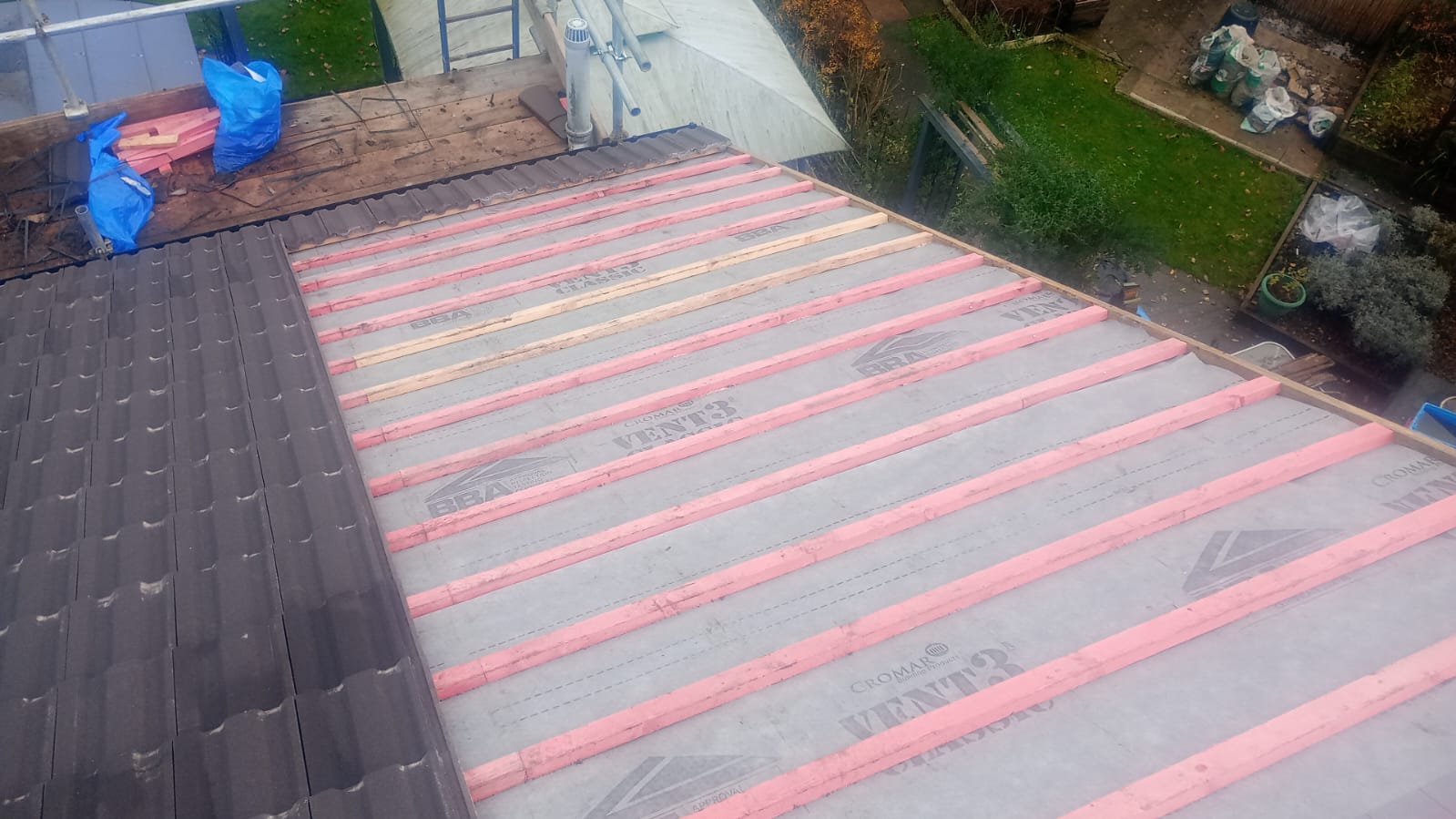
Before adding insulation, the roof itself must remain watertight. Otherwise, insulation traps moisture and worsens existing problems.
For that reason, inspections always check for cracked tiles, damaged flashing or worn underlay. If issues appear, repairs are completed first through our roof repairs service.
Flat Roof Insulation
Flat roofs require a different insulation approach. Insulation may sit above or below the roof deck depending on the structure. When installed correctly, flat roof insulation improves comfort in rooms below and reduces condensation risk.
During upgrades, our flat roofs service often includes insulation improvements alongside repairs or replacements.
Roof Insulation During Home Improvements
Many homeowners choose to upgrade insulation during renovation work. This timing often proves most efficient.
Our renovations service regularly includes insulation upgrades. Similarly, during extensions and conversions, we ensure new roof sections meet modern insulation standards from the outset.
Energy Efficiency and Long Term Savings
Improved insulation reduces heat loss, which lowers energy use over time. As a result, heating bills decrease and comfort improves.
The GOV.UK loft insulation guidance explains how insulation upgrades support energy savings and outlines available support options. Over the long term, insulation often pays for itself through reduced energy costs.
Health and Safety During Insulation Work
Roof insulation work involves working at height and handling materials carefully. All work follows guidance from the Health and Safety Executive. Safe access, correct equipment and proper planning protect everyone involved.
Common Misunderstandings About Roof Insulation
Many homeowners delay insulation because of misunderstandings. For example, some believe insulation only matters in winter. Others worry it causes condensation. In reality, correct installation improves comfort all year and reduces moisture problems.
Why Professional Installation Matters
Poor installation leaves gaps, blocks airflow or traps moisture. Professional installation ensures insulation performs as intended and supports the roof rather than harming it.
Experience with South London housing styles helps ensure the right materials and methods suit each property.
Trusted Roofing and Insulation Services
Homeowners want reassurance that work is carried out properly. We are listed on Checkatrade, where genuine customer reviews reflect the quality of our insulation and roofing work.
Conclusion
Upgrading roof insulation services South London improves comfort, reduces energy bills and protects the structure of your home. Whether insulation is missing, outdated or damaged, addressing it early delivers long term benefits.
For advice or to arrange an inspection, you can contact us here. You can also connect with Rated Roofers and Builders through our business profile. We provide reliable roof insulation and roofing services across South London, Surrey and Sussex and are always happy to help.

Comment (0)