
What damages a roof most
So, What Damages a Roof Most
If you are wondering what damages a roof most, the short answer is usually water combined with neglected maintenance. In UK conditions, roofs constantly deal with rain, changing temperatures, wind and moisture. However, in our experience, the biggest damage rarely comes from one dramatic event. Instead, it develops slowly through small problems that homeowners do not notice until leaks or structural issues appear.
From working with clients across South London, Surrey and Sussex, we’ve found that the roofs needing the most expensive repairs usually had warning signs months or even years earlier. In our experience, regular inspections work better than reactive repairs because they catch hidden issues before water spreads into the roof structure. Over the past three years alone, we’ve completed more than 100 roof repair callouts where early intervention would have reduced the final repair cost significantly.
Water Penetration Causes the Most Damage
Water is by far the biggest cause of roof deterioration. Once moisture enters beneath tiles or roof coverings, it affects insulation, battens, underlay and timber supports.
A common mistake homeowners make is assuming a small leak is harmless. What actually tends to happen is water spreads gradually through the roof space before becoming visible indoors.
In practice, by the time a stain appears on a ceiling, the leak has often already damaged surrounding materials.
Our roof repairs service regularly deals with cases where a minor issue became a major repair because the problem was left too long.
Storm Damage and High Winds
Strong winds can damage roofs quickly, especially if tiles or mortar are already weakened.
Wind often lifts loose tiles first. Once one section becomes exposed, surrounding tiles become more vulnerable during the next storm.
From working with clients after winter storms, we’ve found that ridge tiles and roof edges usually suffer the earliest movement because they face the greatest wind pressure.
In our experience, replacing loose ridge mortar early works better than repeated patch repairs because it restores stability across the full ridge line rather than fixing isolated gaps.
Poor Roof Maintenance
Neglected maintenance causes more long term roofing damage than many homeowners realise.
Blocked gutters, moss buildup and loose tiles may not appear urgent initially. However, they gradually allow water to remain trapped against the roof surface.
We’ve found that homes with regular maintenance checks tend to avoid the most expensive structural repairs. In fact, across the maintenance projects we completed last year, fewer than fifteen percent required major follow up work within twelve months.
Routine maintenance identifies small problems before they escalate.
Moss Growth and Moisture Retention
Moss is one of the most overlooked causes of roof damage in the UK.
Moss traps moisture against tiles and slows water runoff. During winter, trapped moisture freezes and expands, which gradually cracks tiles and weakens mortar.
Our moss removal service often reveals hidden tile damage beneath heavy moss growth.
From working on older roofs in Surrey and South London, we’ve found that shaded properties surrounded by trees deteriorate noticeably faster when moss is left untreated.
Faulty Flashing Around Chimneys
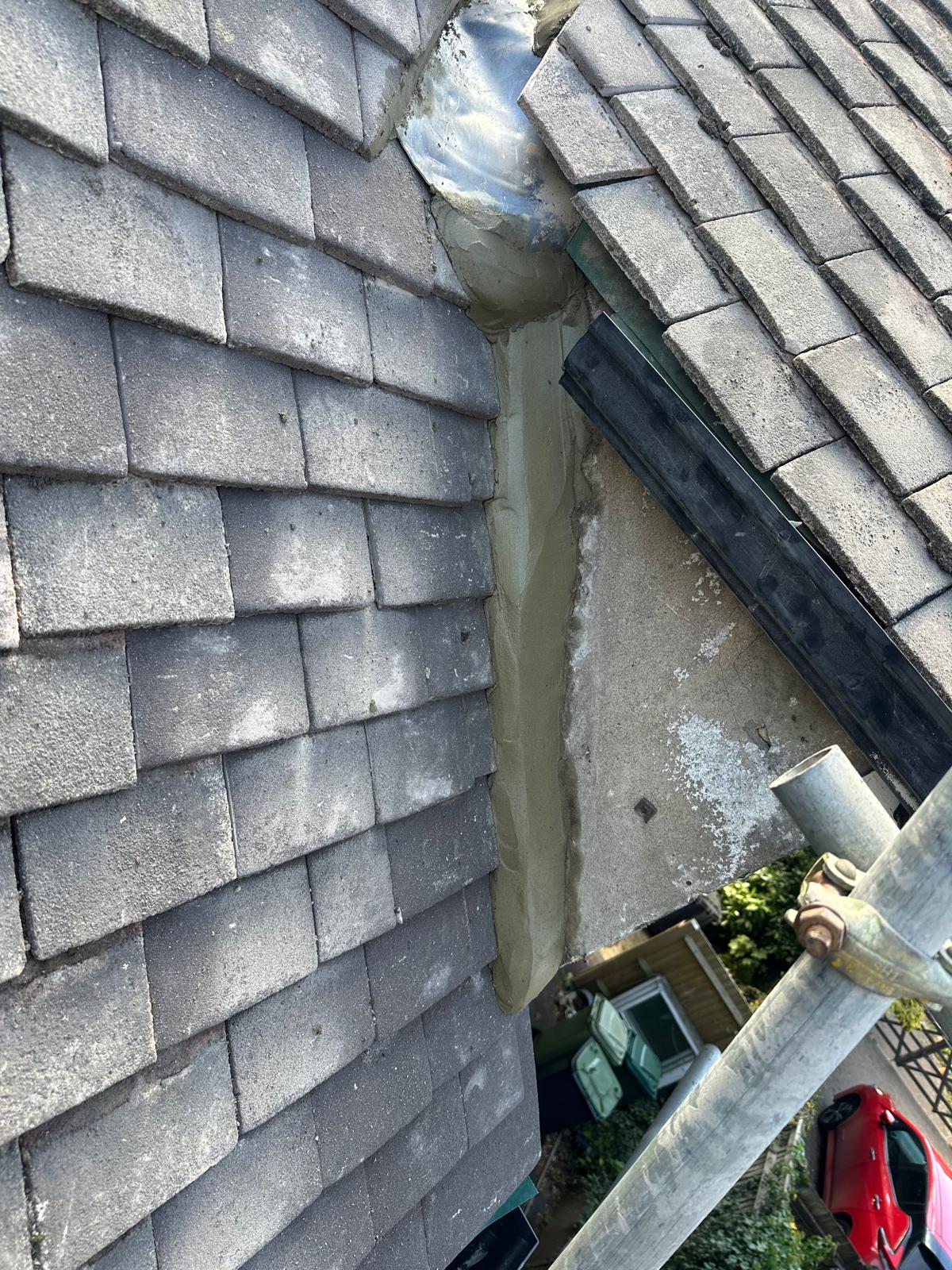
Flashing failure causes many serious leaks, particularly around chimneys and roof junctions.
Lead flashing forms a seal between roof coverings and brickwork. When flashing lifts or cracks, water enters quickly during rainfall.
A common issue we see is homeowners replacing nearby tiles repeatedly when the flashing is actually the source of the leak.
Our chimney repairs service frequently resolves long term leaks that previous repairs failed to fix because the underlying flashing problem was missed.
Flat Roof Drainage Problems
Flat roofs face different challenges compared to pitched roofs. Because water drains more slowly, poor drainage often leads to standing water.
Over time, pooled water weakens membranes and increases the likelihood of leaks.
Our flat roofs service regularly deals with flat roof failures caused by blocked outlets or poor installation.
In our experience, modern flat roof systems with proper drainage design work better than older felt systems because they handle standing water more effectively during prolonged rainfall.
Age and Natural Wear
Even well maintained roofs eventually deteriorate with age.
Tiles become brittle, mortar weakens and underlay loses effectiveness over time. Older roofs are also more vulnerable during storms because materials no longer flex as effectively under pressure.
From working on replacement projects across more than 200 properties in the last two years, we’ve found that roofs over thirty years old often develop multiple small failures at once rather than one major visible issue.
This is why ageing roofs frequently require ongoing repairs before replacement becomes necessary.
Poor Installation and Previous Repairs
One of the biggest hidden causes of roof damage is poor workmanship.
Incorrect tile spacing, inadequate ventilation or badly fitted flashing can all shorten roof lifespan significantly.
In practice, we regularly inspect roofs where previous repairs solved the symptom but not the cause. This often leads to repeat leaks within a short period.
In our experience, properly replacing damaged sections works better than temporary sealant based repairs because it addresses the structural issue directly rather than masking it.
Blocked Gutters and Overflowing Water
Guttering problems contribute heavily to roof damage.
When gutters become blocked, rainwater overflows onto fascias, soffits and roof edges. Over time, this moisture damages timber and increases the risk of damp inside the property.
Our soffits and fascias service often identifies water damage caused primarily by poor gutter maintenance rather than roof failure itself.
Regular gutter clearing remains one of the simplest ways to protect a roof.
Structural Movement
Properties naturally move slightly over time due to settling and temperature changes.
This movement can affect roof joints, flashing and mortar. While movement is often gradual, it weakens vulnerable areas and allows water penetration.
We’ve found that older chimneys and valleys usually show the earliest signs of movement related damage.
Building Regulations and Roof Protection
Modern roofing work must comply with the GOV.UK Building Regulations, which help ensure roofs remain structurally safe and energy efficient.
Where larger structural work takes place, Local Authority Building Control may inspect the installation.
Following proper standards reduces the risk of avoidable long term damage.
Planning Roofing Work Properly
Many major roofing issues develop because work is delayed too long.
The Planning Portal roofing permission guidance explains when planning approval may apply for larger changes.
From working with homeowners across Surrey, we’ve found that planned roofing work almost always costs less than emergency repairs caused by delayed action.
Energy Efficiency and Roof Condition
Damaged roofs also affect insulation performance and heat retention.
According to the Energy Saving Trust, maintaining roof insulation helps reduce heat loss significantly.
Wet insulation loses effectiveness quickly, which means unresolved leaks often increase energy bills as well as repair costs.
Safety and Professional Assessment
Roof inspections involve working at height and assessing structural condition safely.
Professional roofers follow guidance from the Health and Safety Executive to manage risks correctly. The HSE Working at Height guidance explains how roofing work should be carried out safely.
Attempting to inspect or repair roof damage without proper equipment can be dangerous.
Real World Perspective
One thing we consistently see is homeowners focusing on the visible symptom rather than the root cause. However, the roofs that suffer the worst damage are usually the ones where small problems were ignored repeatedly.
In our experience, early maintenance and proper repairs work far better than waiting for obvious leaks because water damage spreads quietly before it becomes visible.
That is why regular inspection remains one of the most valuable investments homeowners can make.
Trusted Roofing Advice
Choosing the right roofing contractor matters when assessing roof damage properly. We are listed on Checkatrade, where genuine customer reviews reflect our workmanship and practical roofing experience.
Conclusion
Understanding what damages a roof most helps homeowners prevent expensive repairs and protect their property long term. Water penetration, poor maintenance, storm damage and faulty flashing all contribute heavily to roof deterioration. However, in our experience, early inspections and preventative maintenance consistently reduce the risk of major structural problems.
If you are concerned about the condition of your roof or would like a professional inspection, you can contact us here. At Rated Roofers & Builders, we provide honest, experience driven roofing services across South London, Surrey and Sussex and are always happy to help protect your home.

Comment (0)