Signs Your Roof is Failing
What are Some Common Signs Your Roof Is Failing
Your roof protects your home from rain, wind, frost and temperature changes every day. However, because most homeowners rarely inspect it closely, problems often develop unnoticed. Recognising the early signs that your roof is failing allows you to act quickly and prevent more extensive and costly damage.
I regularly inspect roofs across South London, Surrey and Sussex where small warning signs have turned into larger structural problems. Understanding what to look for helps you protect your home and plan repairs properly.
Persistent Leaks or Water Stains
One of the clearest signs your roof is failing is repeated water ingress. Brown stains on ceilings, peeling paint or damp patches in the loft indicate that water has entered the roof structure.
Although a single leak may result from minor flashing damage, repeated leaks often signal more widespread deterioration. Furthermore, leaks that appear in multiple rooms usually indicate that the roofing system no longer provides consistent protection.
Our roof repairs service often identifies whether the issue is isolated or part of a broader problem.
Slipped or Cracked Tiles
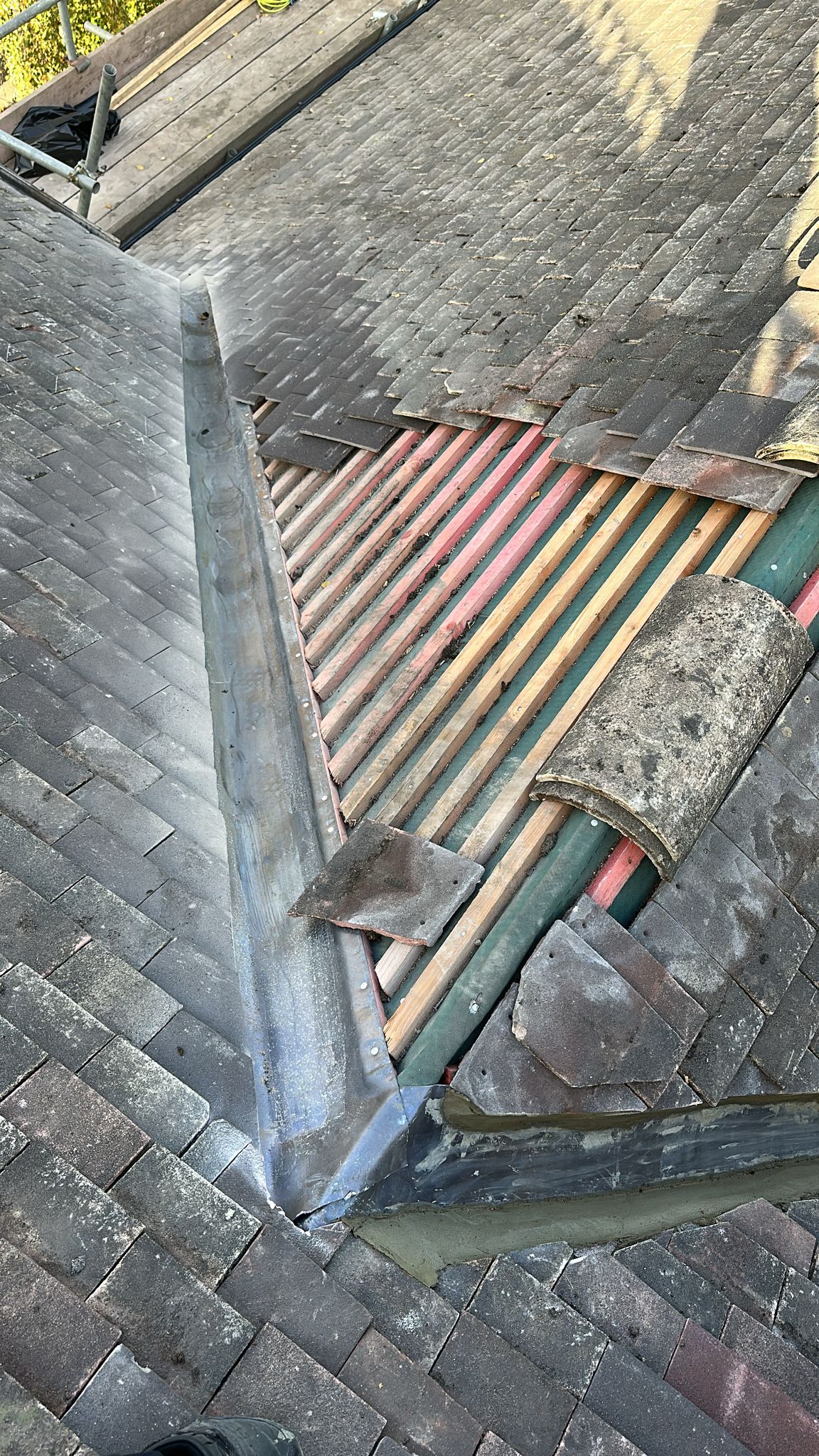
Loose, cracked or missing tiles frequently indicate that a roof is failing. While replacing a few tiles often solves localised damage, widespread tile movement suggests deeper wear.
Wind and frost gradually weaken fixings and mortar. Over time, this allows tiles to shift more easily. If you notice multiple areas of movement, the roof may require more than minor repairs.
Early inspection prevents further tile loss during storms.
Deteriorating Ridge Mortar
Ridge tiles sit at the highest point of the roof and experience strong wind exposure. When ridge mortar cracks or crumbles, water penetrates beneath the surface.
If several ridge tiles appear unstable, this often indicates ageing mortar throughout the roof. Because ridge failure exposes the roof structure directly, addressing it quickly remains essential.
Ignoring ridge issues increases the likelihood of internal water damage.
Sagging Roofline
A sagging roofline represents a serious sign that a roof is failing. Visible dips or uneven lines often indicate structural weakness in the supporting timbers.
Moisture intrusion over time may weaken battens or rafters. Consequently, the roof surface no longer sits evenly.
Structural concerns require immediate professional assessment because they affect the stability of the entire roof.
Underlay Deterioration
Roof tiles protect the underlay beneath them. However, when underlay deteriorates, leaks may develop even if tiles appear intact.
In the loft, signs of underlay failure include sagging felt, tears or visible daylight through the roof covering.
When underlay fails across large areas, patch repairs rarely provide lasting protection. In these cases, replacement may offer the safest solution.
Excessive Moss Growth
Although moss may seem cosmetic, heavy growth often contributes to roof deterioration. Moss retains moisture and increases freeze related cracking.
Over time, moss lifts tiles slightly and disrupts alignment. This movement allows water to enter beneath the surface.
Our moss removal service helps reduce moisture retention and prevent further deterioration.
Repeated Flashing Problems
Flashing seals joints around chimneys, roof valleys and wall abutments. When flashing cracks or lifts, leaks frequently develop.
If flashing requires repeated repair, it may indicate movement in surrounding roof components. In these cases, the issue may extend beyond flashing alone.
Our chimney repairs service often addresses flashing deterioration that contributes to ongoing leaks.
Flat Roof Surface Cracking
Flat roofs show different warning signs compared to pitched roofs. Surface cracking, lifting edges or standing water often indicate ageing materials.
If repairs fail to stop leaks or surface deterioration spreads, the roof covering may have reached the end of its lifespan.
Our flat roofs service includes inspection and replacement options depending on condition.
Increased Energy Bills
If your roof is failing, you may notice higher heating costs. Gaps in insulation, damaged underlay or ventilation problems allow heat to escape.
According to the Energy Saving Trust, improving roof insulation significantly reduces heat loss. Therefore, roofing issues often affect energy efficiency as well as weather protection.
Addressing roof problems may improve comfort and reduce energy costs.
Age of the Roof
Roof age plays a crucial role in determining condition. Most tiled roofs last between twenty and forty years depending on material and maintenance. Flat roofs may have shorter lifespans.
If your roof approaches or exceeds its expected lifespan and several warning signs appear, replacement often becomes the more practical solution.
Our new roofs service provides long term solutions when roofs reach the end of their useful life.
Interior Signs of Failure
Sometimes the first sign that a roof is failing appears indoors. Peeling wallpaper, damp smells or mould growth in upper rooms often indicate moisture intrusion.
Because internal symptoms may appear far from the source, professional inspection helps trace the true cause accurately.
Early intervention prevents structural timber damage and further deterioration.
Storm Damage Indicators
After severe weather, check for visible tile displacement or debris in gutters. Even minor storm movement can weaken fixings.
If strong winds have recently occurred, arranging a roof inspection helps identify hidden damage.
Prompt repairs prevent small issues from escalating.
Building Regulations and Replacement
When failure becomes widespread and replacement is necessary, work must comply with the GOV.UK Building Regulations.
These standards ensure structural stability and adequate insulation. In some cases, Local Authority Building Control may inspect the work.
Understanding these requirements helps homeowners prepare for larger projects.
Planning Considerations
Most roof repairs and replacements fall under permitted development. However, changes to roof height or structure may require approval.
The Planning Portal roofing permission guidance explains when permission may apply.
Checking guidance early prevents delays.
Safety and Professional Assessment
Roof inspections involve working at height. Professional roofers follow guidance from the Health and Safety Executive to manage risks properly.
The HSE Working at Height guidance outlines safe practices during inspection and repair.
Attempting to assess roof condition without proper equipment increases the risk of injury.
Why Early Action Matters
When a roof is failing, delays increase repair costs. Water damage spreads quickly through insulation and timbers.
However, early detection often allows targeted repairs that extend roof life.
Professional advice ensures you take the right action at the right time.
Trusted Roofing Advice
Homeowners value clear and honest guidance when facing roofing concerns. We are listed on Checkatrade, where genuine reviews reflect our reliability and workmanship standards.
Conclusion
Recognising the signs that your roof is failing helps you avoid unexpected structural damage and rising costs. Persistent leaks, tile movement, sagging rooflines and ageing materials all indicate that professional assessment is necessary. While repairs often resolve early problems, widespread deterioration may require replacement.
If you suspect your roof is failing or want reassurance about its condition, you can contact us here. At Rated Roofers & Builders, we provide honest roofing inspections and reliable services across South London, Surrey and Sussex and are always happy to help protect your home.

Comment (0)