
Do Loose Roof Tiles Always Need Replacing?
So, Do Loose Roof Tiles Always Need Replacing
When homeowners notice movement on their roof, one of the first questions they ask is whether loose roof tiles need replacing. While loose tiles can look concerning, they do not always require full replacement. In many cases, the issue relates to fixing, mortar or positioning rather than the tile itself.
I regularly inspect roofs across South London, Surrey and Sussex where tiles have shifted due to weather exposure rather than material failure. Understanding the cause of loose tiles helps determine whether repair or replacement is the right solution.
Why Roof Tiles Become Loose
Roof tiles become loose for several reasons. Over time, strong winds apply repeated pressure to tiles, especially along edges and ridges. As a result, fixings can weaken gradually.
In addition, mortar used to secure ridge tiles can deteriorate due to freeze thaw cycles. When water enters small cracks and then freezes, it expands and causes movement. Eventually, tiles shift slightly out of position.
Age also plays a role. Older roofs may rely on outdated fixing methods that no longer meet modern standards. Consequently, tiles may loosen even if they remain structurally sound.
Do Loose Roof Tiles Always Need Replacing
Loose roof tiles need replacing only when the tile itself has cracked, broken or deteriorated. However, if the tile remains intact, roofers can often refit and secure it properly.
For example, if wind has lifted a tile but it remains undamaged, securing it with correct fixings may resolve the issue fully. Similarly, if ridge mortar has failed, repointing may restore stability without replacing tiles.
Therefore, professional inspection remains essential before assuming replacement is necessary.
When Replacement Is Necessary
Although repair often works, certain situations require replacement.
If the tile has cracked due to frost damage, replacing it prevents future leaks. Likewise, if tiles show signs of surface erosion or structural weakness, refitting them would not provide reliable protection.
In addition, if multiple tiles show deterioration across the roof, replacement may offer better long term value.
Our roof repairs service includes assessing whether individual tiles can be secured or whether replacement is required.
The Risks of Ignoring Loose Tiles
Even if loose roof tiles need replacing only in some cases, ignoring them creates risk.
Loose tiles allow water to enter beneath the surface. Over time, moisture damages underlay and roof timbers. Furthermore, tiles that remain unsecured may slip further during high winds.
Because of this, early intervention prevents minor movement from becoming major damage.
Loose Ridge Tiles Versus Main Roof Tiles
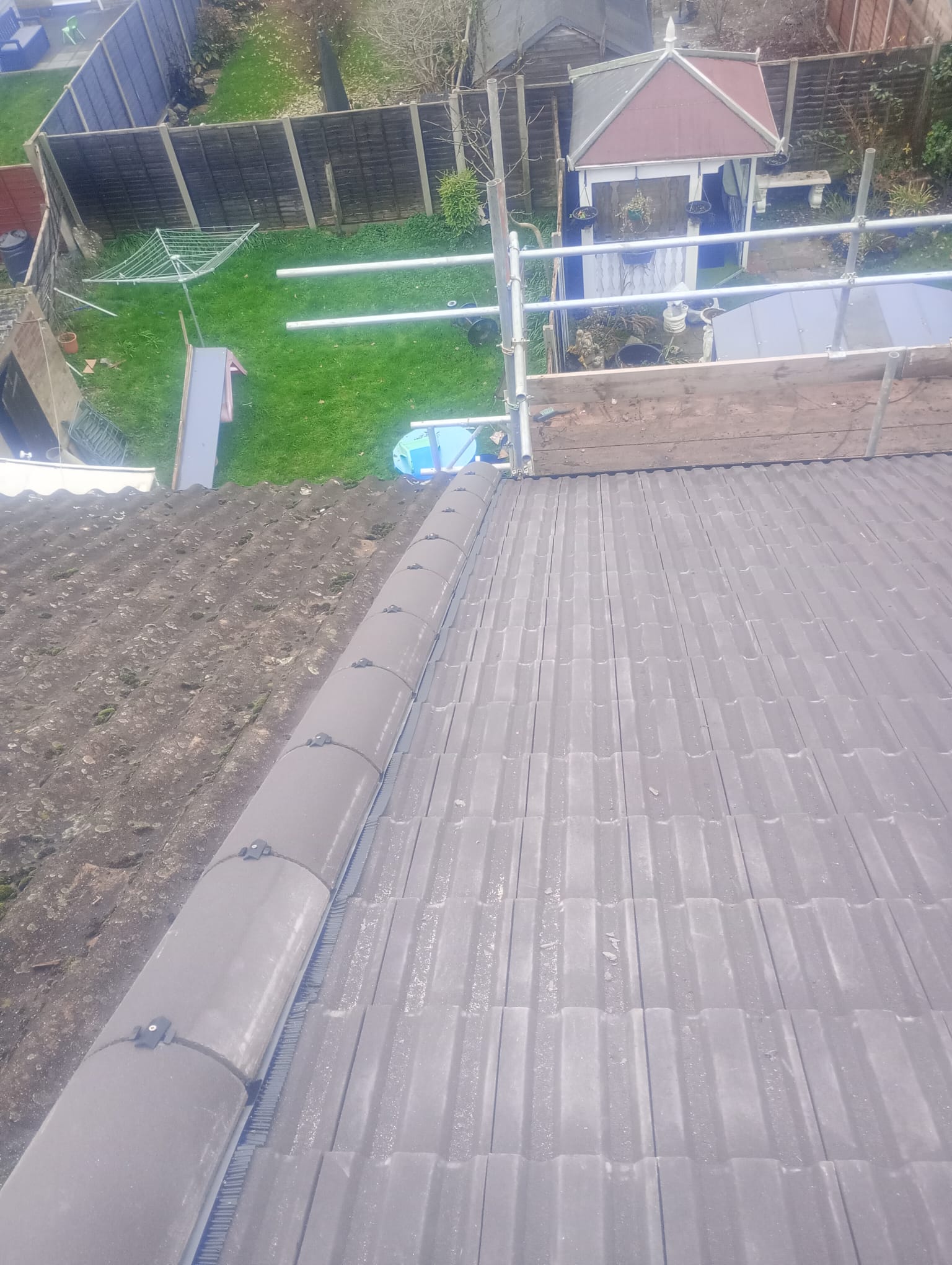
Loose ridge tiles differ slightly from standard roof tiles. Ridge tiles sit at the highest point of the roof and experience greater wind exposure.
When ridge mortar fails, ridge tiles often loosen first. In many cases, repointing or rebedding resolves the issue. However, cracked ridge tiles require replacement.
Accurate diagnosis ensures the correct repair method is used.
Flat Roof Tiles and Loose Components
Although flat roofs do not use traditional tiles, they still experience lifting edges or membrane movement.
Our flat roofs service often addresses lifted edges that resemble loose tiles in pitched systems.
Understanding the roof type ensures the correct approach is taken.
The Role of Regular Inspections
Regular roof inspections help identify loose tiles before they become serious problems.
Inspections involve checking tile alignment, ridge mortar, flashing and fixings. Detecting early movement allows roofers to secure tiles before water damage occurs.
Because roof movement often begins subtly, inspections remain a valuable preventative measure.
Storm Damage and Loose Tiles
Storms frequently cause loose tiles. However, not all storm related movement requires replacement.
If wind dislodges tiles but leaves them intact, refitting them properly may restore full protection. However, if impact damage occurs from falling debris, replacement may become necessary.
Documenting storm damage also helps with insurance claims if applicable.
Insurance and Loose Roof Tiles
Insurance policies often cover sudden storm damage but rarely cover wear and tear.
If loose tiles result from a specific weather event, insurance may apply. However, gradual deterioration usually falls under maintenance responsibilities.
Professional assessment helps clarify whether a claim is appropriate.
When Loose Tiles Signal Larger Problems
Occasionally, loose tiles indicate wider structural issues. For example, failing battens or underlay may prevent tiles from securing properly.
In such cases, simply refitting tiles may not resolve the underlying cause. Instead, more comprehensive repairs may be required.
Our new roofs service provides solutions when repeated movement indicates that the roof has reached the end of its lifespan.
Chimney Areas and Tile Movement
Tiles around chimneys often loosen due to flashing deterioration.
When flashing pulls away, water enters and weakens surrounding materials. In these cases, addressing the flashing may resolve tile movement.
Our chimney repairs service often resolves leaks and movement around chimney areas without unnecessary tile replacement.
Moss and Tile Movement
Moss growth can also contribute to loose tiles. As moss expands, it lifts tiles slightly and disrupts alignment.
Over time, this movement increases vulnerability to wind damage.
Our moss removal service helps reduce this risk and prevent further tile displacement.
Building Regulations and Tile Replacement
When larger sections of a roof require replacement, work must comply with the GOV.UK Building Regulations.
These regulations ensure structural stability and energy efficiency. Understanding this helps homeowners plan appropriately if repairs extend beyond minor tile replacement.
Safety Considerations
Attempting to secure loose tiles without proper equipment carries serious risk. Roofing involves working at height, which requires safe access and correct procedures.
Professional roofers follow guidance from the Health and Safety Executive. The HSE Working at Height guidance explains why proper safety planning matters during roof repairs.
Avoid climbing onto roofs without training and equipment.
Why Professional Assessment Matters
Because loose tiles do not always need replacing, accurate inspection prevents unnecessary work.
A professional roofer assesses whether the tile remains sound, whether fixings have failed or whether broader issues exist. This approach ensures the most cost effective and reliable solution.
Trusted Roofing Advice
Homeowners benefit from clear, honest advice when dealing with loose tiles. We are listed on Checkatrade, where genuine reviews reflect our commitment to quality workmanship and transparent communication.
Conclusion
Loose roof tiles need replacing only when the tile itself has deteriorated or cracked. In many cases, refitting or securing tiles restores full protection. However, ignoring movement allows water damage to develop and increases long term costs.
If you have noticed loose tiles or want a professional roof inspection, you can contact us here. At Rated Roofers & Builders, we provide honest roofing advice and reliable services across South London, Surrey and Sussex and are always happy to help protect your home.

Comment (0)