
Can Bad Weather Damage a Roof Over Time?
So, Can Bad Weather Damage a Roof Over Time
Bad weather affects every roof, even when problems are not immediately visible. Rain, wind, frost and temperature changes gradually wear down roofing materials and supporting components. Although a roof may appear fine from the ground, weather exposure often causes slow deterioration beneath the surface. Understanding how bad weather damage a roof over time helps homeowners recognise early warning signs and take action before serious issues develop.
I regularly inspect roofs across South London, Surrey and Sussex where long term weather exposure has weakened materials without causing obvious leaks at first. Knowing how weather affects roofing systems helps prevent unexpected repairs and unnecessary costs.
How Rain Affects a Roof Over Time
Rain places constant pressure on roofing materials. While tiles and roof coverings are designed to shed water, repeated exposure tests every joint, overlap and fixing.
Over time, water finds its way into small gaps created by movement, wear or ageing mortar. Once moisture reaches the underlay, it begins to spread across the roof structure. As a result, leaks may appear long after the original weakness developed.
Blocked gutters also worsen the impact of rain. When water cannot drain properly, it overflows onto roof edges and soaks into roofline components.
Wind Damage and Roof Wear
Strong winds do more than cause sudden storm damage. Even moderate winds apply repeated uplift pressure on tiles and slates.
Over time, fixings loosen and tiles shift slightly. Each movement increases the gap between materials, allowing wind driven rain to enter. Ridge tiles often suffer first because they sit at the most exposed point of the roof.
Although a single windy day may not cause visible damage, repeated exposure weakens the roof steadily.
Frost and Freeze Thaw Cycles
Frost plays a major role in roof deterioration in the UK. Water enters small cracks in tiles or mortar and then freezes. When water freezes, it expands.
This expansion widens cracks gradually. Each freeze thaw cycle makes the damage worse. Eventually, tiles crack fully or mortar breaks away.
Because this process happens slowly, homeowners often miss it until tiles fail or leaks appear inside the property.
Temperature Changes and Roof Movement
Roofs expand and contract as temperatures change. During warm weather, materials expand. During colder periods, they contract.
This constant movement stresses joints, fixings and flashing. Over time, mortar cracks and flashing pulls away from surfaces.
Flat roofs experience this movement more noticeably because larger surface areas expand and contract together. Without flexibility, materials split or lift.
Sunlight and Material Degradation
Although rain and cold often receive more attention, sunlight also affects roofs. Ultraviolet exposure breaks down protective surfaces on tiles and flat roofing materials.
As surfaces wear, materials absorb more moisture. This increased absorption makes them more vulnerable to frost and rain damage.
Older roofs often show signs of surface erosion caused by decades of sun exposure combined with weather extremes.
Moss Growth and Moisture Retention
Bad weather creates ideal conditions for moss growth. Moss thrives in damp environments and often appears on north facing roof slopes.
Moss traps moisture against tiles, which keeps them wet for longer periods. As a result, tiles experience more freeze thaw damage and surface wear.
In addition, moss breaks down over time and blocks gutters, which causes water overflow. Our moss removal service helps reduce moisture retention and protects roofing materials.
Chimneys and Flashing in Bad Weather
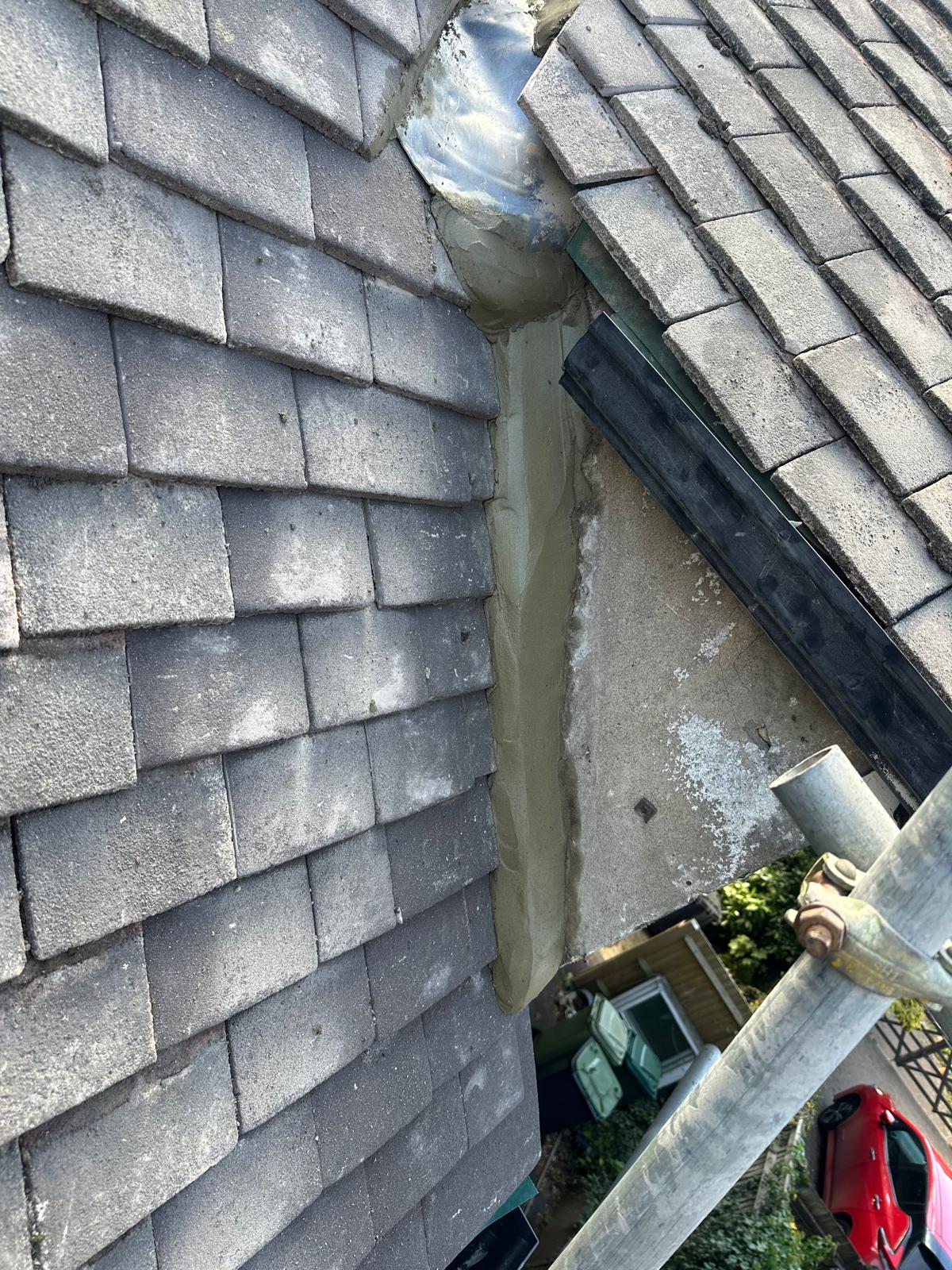
Chimneys represent one of the most vulnerable areas during prolonged bad weather. Flashing seals the joint between the roof and chimney.
Repeated rain and wind gradually weaken flashing. Mortar cracks, lead lifts and small gaps form. Once flashing fails, water enters the roof structure directly.
Our chimney repairs service often resolves leaks caused by weather related flashing failure.
Flat Roofs and Prolonged Weather Exposure
Flat roofs face particular challenges in bad weather. Because water drains more slowly, rain sits on the surface for longer.
Over time, standing water finds weaknesses in the roof covering. Small cracks, lifting edges or split seams allow moisture to enter beneath the surface layers.
Once moisture spreads under the covering, damage often becomes widespread before leaks appear inside. Our flat roofs service frequently addresses flat roof damage caused by long term weather exposure.
Roofline Components and Weather Damage
Weather does not only affect tiles or coverings. Fascias and soffits protect roof edges and support guttering.
When gutters overflow during heavy rain, water soaks into roofline boards. Over time, these boards deteriorate and allow water to enter the roof structure.
Our soffits and fascias service often forms part of repairs where weather exposure has damaged roof edges.
Why Weather Damage Is Often Missed
Weather damage develops slowly. Homeowners rarely inspect roofs closely unless a leak appears.
Many early signs remain subtle. Slight tile movement, hairline cracks and minor mortar wear often go unnoticed from ground level.
However, these small issues allow moisture to enter repeatedly. By the time damage becomes visible inside the home, weather exposure has already caused significant deterioration.
The Cumulative Effect of Bad Weather
Bad weather damage a roof not through one event but through accumulation. Each storm, frost cycle and rainy season adds stress.
While roofs are designed to cope with weather, they rely on maintenance to remain effective. Without attention, weather exposure gradually overcomes protective measures.
This cumulative damage explains why older roofs often fail suddenly after appearing fine for years.
How Regular Inspections Help
Regular roof inspections identify weather related damage early. Inspections reveal cracked tiles, loose ridge mortar and failing flashing before leaks develop.
Our roof repairs service often follows inspections where early intervention prevents extensive damage.
Inspecting roofs after severe weather events also helps catch damage before it worsens.
Weather Damage and Building Regulations
When weather damage leads to major work, repairs or replacements must comply with current standards. Roof replacements and insulation upgrades must meet the GOV.UK Building Regulations.
Understanding these requirements helps homeowners plan work correctly and avoid delays.
Safety Concerns During Bad Weather
Inspecting or repairing roofs during bad weather increases risk. Wet surfaces and strong winds create hazardous conditions.
Professional roofers follow guidance from the Health and Safety Executive to manage these risks. The HSE Working at Height guidance explains why safety planning matters during roofing work.
When Weather Damage Leads to Replacement
In some cases, long term weather exposure damages roofs beyond repair. Widespread underlay failure, repeated leaks and weakened structure often signal that replacement provides better value.
Our new roofs service offers long term solutions when weather damage has reached this stage.
How Weather Damage Affects Property Value
Roof condition plays a major role in property value. Visible signs of weather damage reduce buyer confidence and may affect sale price.
Maintaining the roof protects not only the structure but also the value of the home.
Preventing Weather Related Roof Damage
Although weather cannot be controlled, its impact can be reduced. Regular inspections, prompt repairs and routine maintenance all help roofs withstand bad weather.
Clearing gutters, removing moss and addressing small defects early significantly reduce long term damage.
Trusted Roofing Advice
Homeowners want reassurance that advice reflects real roof condition rather than guesswork. We are listed on Checkatrade, where genuine reviews reflect our honest assessments and quality workmanship.
Conclusion
Yes, bad weather damage a roof over time. Rain, wind, frost and temperature changes gradually weaken roofing materials and supporting components. While damage often develops slowly, ignoring early signs almost always leads to higher repair costs later.
If you are concerned about weather related roof damage or want peace of mind, you can contact us here to arrange a professional inspection. You can also connect with Rated Roofers and Builders through our Google My Business profile. We provide reliable roofing services across South London, Surrey and Sussex and are always happy to help protect your home.

Comment (0)